

We Compared the Leading Attic Stairs Insulation Covers. Here's Why DraftDoze is #1:
 Written by Sarah Jennings
The trouble with a loose cover is that it never seals. Air finds the edges, and you have to lift the whole thing off before every trip up the ladder, then fight it back into the gap with your arms full. After a few trips most owners leave it off, and the opening in the ceiling is wide open again.
What works better is a cover that stays where you put it. Look for foil on both faces, panels that hold their shape, and an opening you can work from the ladder so the cover never comes down. Fit matters as much, because a cover that comes up short will not close around the frame.
Choosing is harder than it looks. Product descriptions sound alike while the parts differ: layers, zippers, weight and the way each one opens. Every attic stairs insulation cover here promises a calmer hallway, yet few share the same access design. We compared them on four buyer-facing criteria.
Here's what we found.
How We Compared Them
We compared five zippered covers on four criteria: Insulation Performance, Zipper Access, Fit and Sizing, and Installation Ease. This is a paper comparison. We read published specs, materials, layer structures, size charts and design details, then weighed them against real buyer feedback.
For each attic stairs insulation cover we asked the same questions. What are the faces made of, how is the access opening built, how much does it weigh, and what do buyers praise or complain about? Heat reflection figures are reported as the maker's claim, never as our own result.
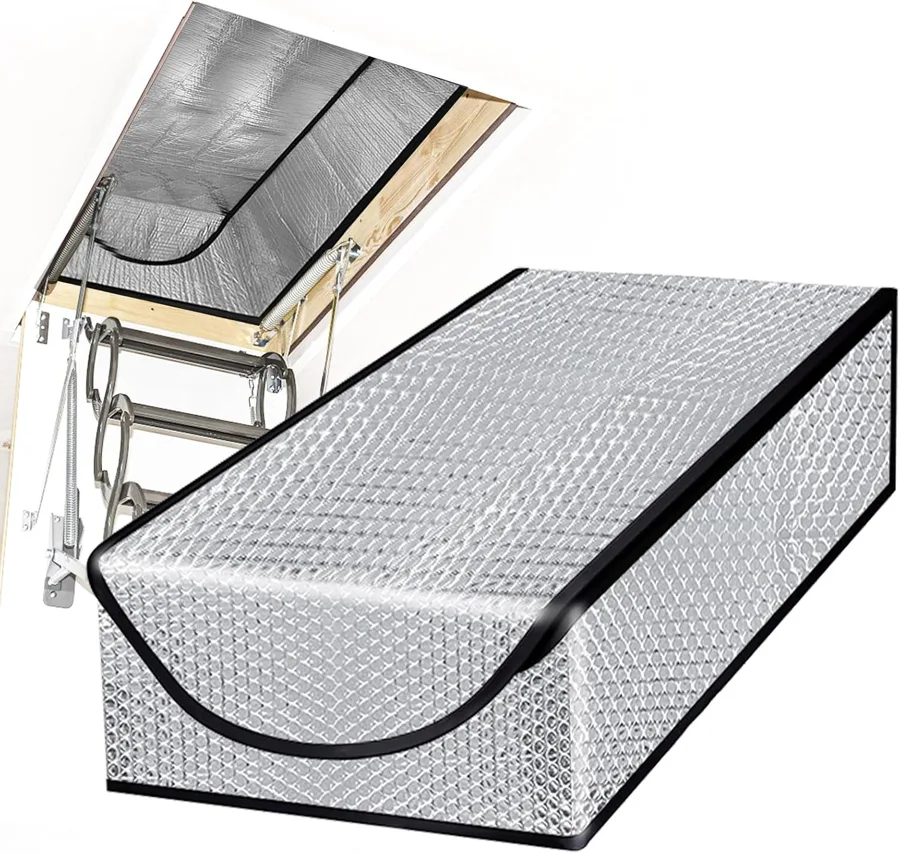
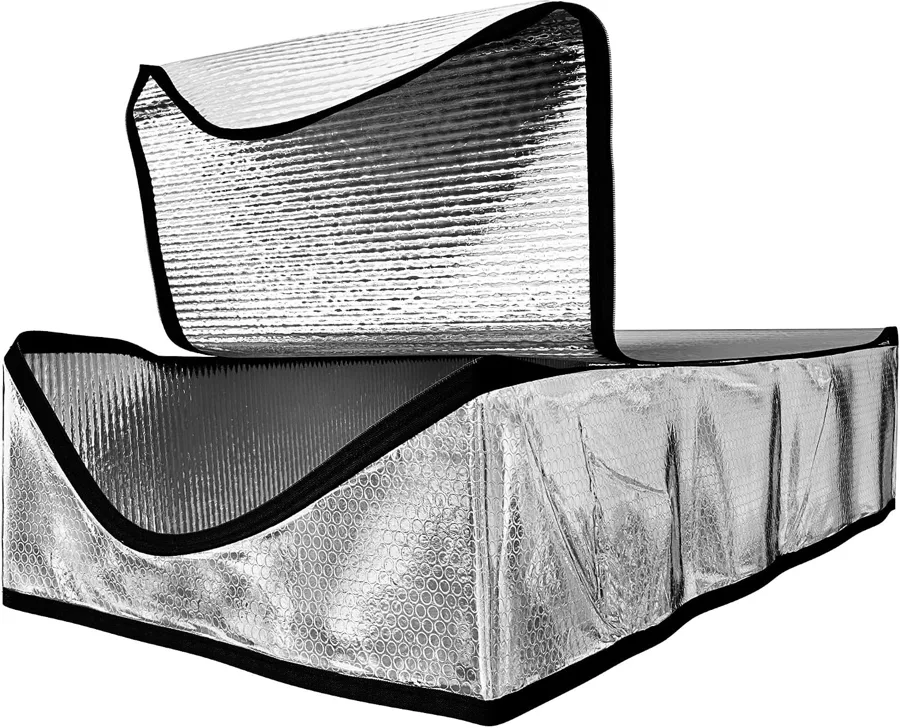
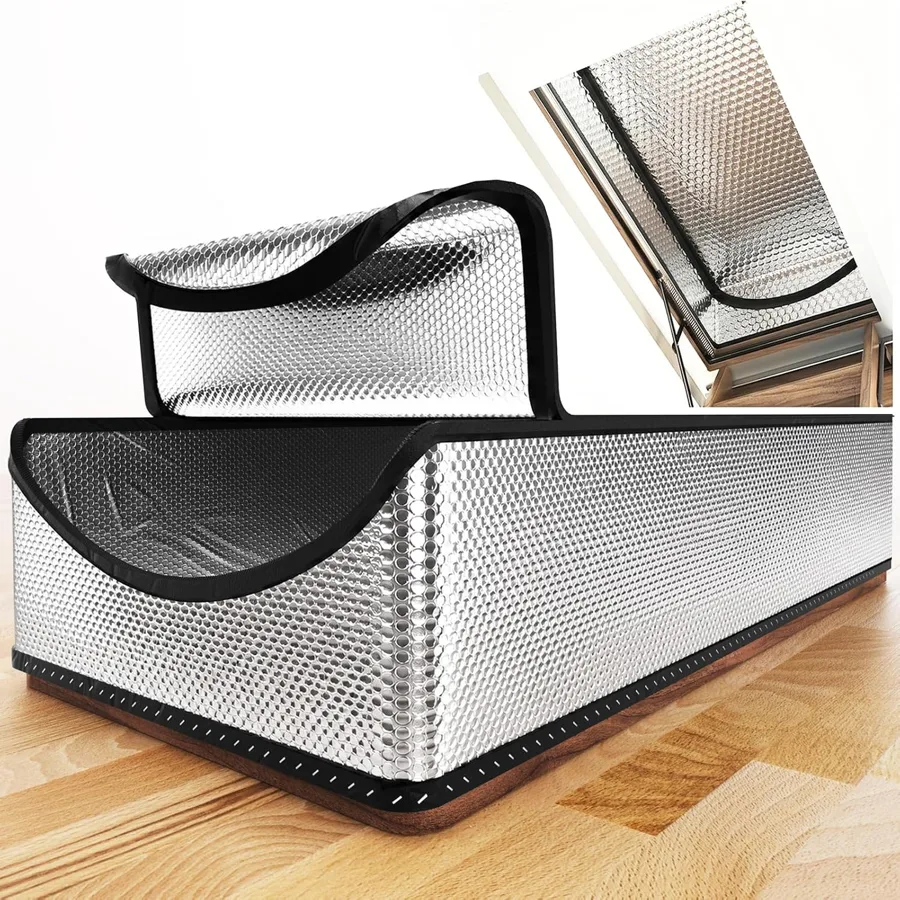
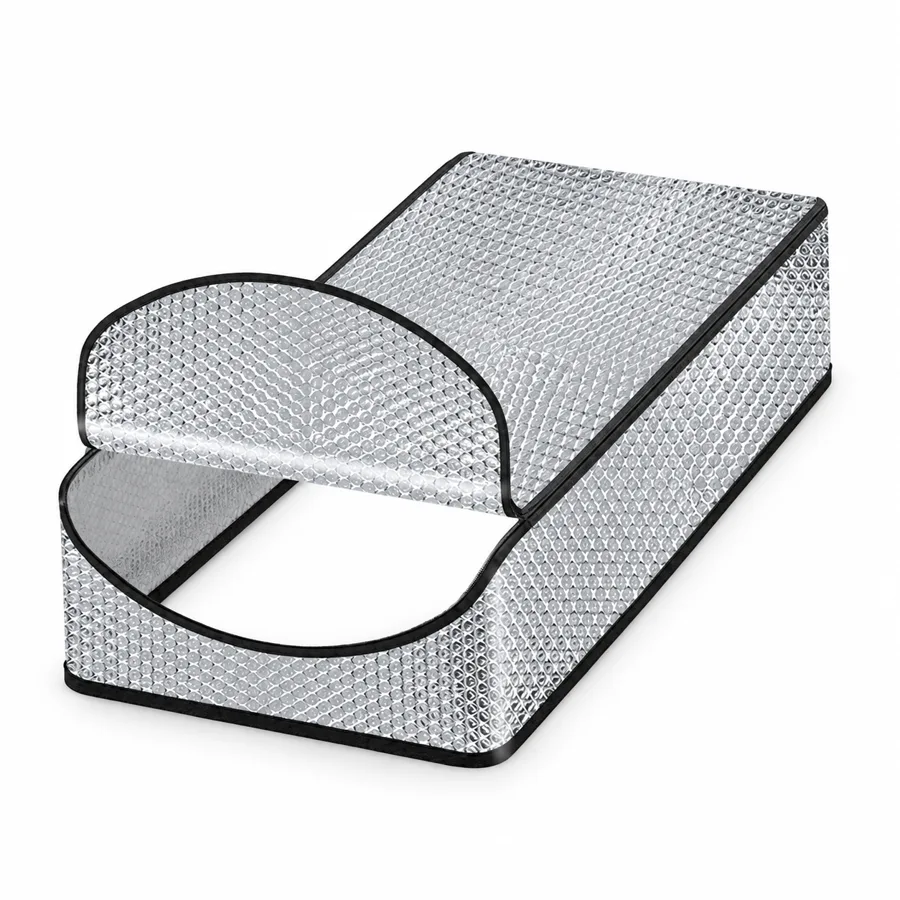
Our top pick won on its top access flap. Two zipper sliders on one curved zipper open a U-shaped flap, so you climb up and zip it shut behind you without taking the cover down. It also has foil on both faces around a bubble core, with a 97% radiant heat reflection claim.
Secondary strengths add up. The stiff panels hold their shape instead of slumping, the whole cover weighs 380 g (0.84 lb), and it folds to 32 x 27 x 9 cm (12.6 x 10.6 x 3.5 in). It goes in with ordinary staples or nails, with tape for the seams, and it is described as all-season.
One honest limit: it comes in one size, 54 x 25 x 11 in (137.2 x 63.5 x 27.9 cm), so you need to measure your framed opening first. That is a quick job with a tape measure, and it is a step every cover in this group asks of you.
The Results:
DraftDoze is the top pick because it pairs a top-opening zipper flap and shape-holding foil panels with a light, flat-packed build that goes up with ordinary staples.
Value
Your routine gets shorter. You unzip the top flap, climb up for the holiday boxes, and zip it shut behind you. Nothing comes down, nothing gets balanced on a ladder rung, and the cover is already back in place when you step off.
Putting it off has a price too. A makeshift fix gets replaced, and you repeat the same chore next season. A cover you can open from the ladder is one you will actually keep closed, so the one-time install is the last you do.
Build adds confidence. Foil on both faces surrounds an insulation board, the embossed bubble pattern covers every face, and black fabric edge binding finishes the edges. The panels are stiffer than softer competing covers, and two zipper sliders share one curved zipper. Put it up once and let it do its job.
A Hallway That Stops Feeling Like the Attic's Front Porch
Picture a hallway where a foil-faced cover sits between you and the attic, with the 97% radiant reflection the maker claims. In December you unzip the top flap, hand down the wreath box, and zip it closed again.
Others who benefit include new homeowners after their first winter, families finishing a garage or basement project who want the attic opening handled, and anyone who goes up for seasonal storage several times a year.
Frequently Asked Questions
Measure the framed opening as length x width x depth, then compare it with the cover size of 54 x 25 x 11 in (137.2 x 63.5 x 27.9 cm). It comes in one size. If your opening is clearly smaller or larger, choose a different size rather than force it.
Two sliders share one curved zipper that opens a U-shaped flap in the top. We have no lifespan figure for it, so check the zipper first when the cover arrives and close it gently each time.
No R-value is given for this model. It has foil, bubble core, foil layers and the maker's 97% radiant heat claim. It seals one leak, the attic opening, and works best with good attic floor insulation, so we promise no bill amount.
We have no fire-rating information for this cover, so we make no claim. Check the maker's details before using it near wiring or lights in your attic.
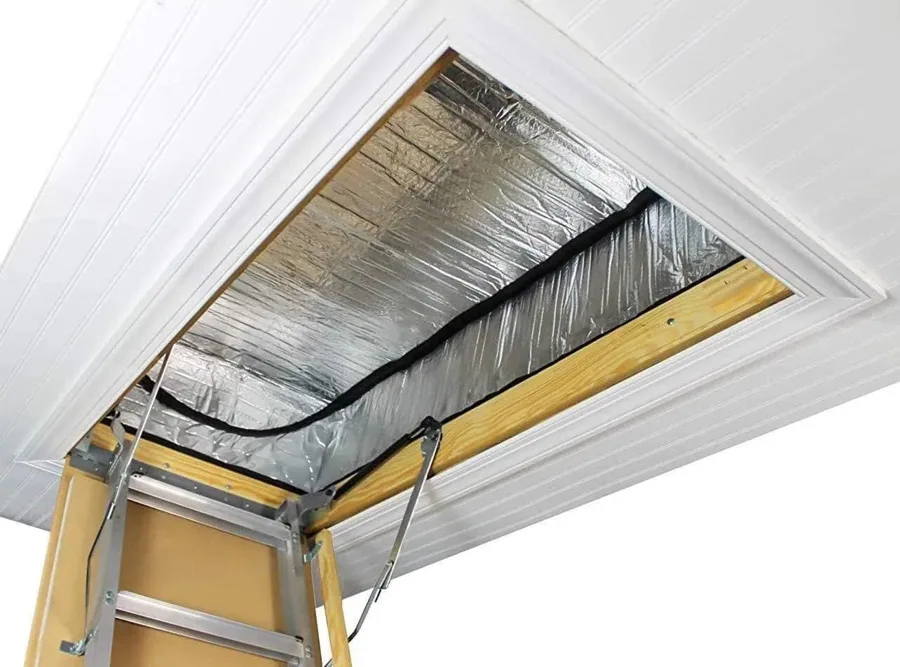
Unfold the flat cover into its box shape, insert it into the opening and staple it to the frame. Ordinary staples or nails work, and tape closes the seams. Check that no gaps remain around the edge.
Its panels are stiffer and hold their shape compared with softer competing covers, so the box keeps its form. The 380 g (0.84 lb) weight is a lifting benefit: it is easy to raise into the opening.
Yes. Two zipper sliders on one curved zipper open a U-shaped flap in the top. You unzip, climb up for your boxes and zip it closed behind you, so the cover stays in place.
It is described as an insulation and dust cover for stair access. Boxing in the opening with a zippered cover puts a barrier between the attic and the rooms below. Close the zipper behind you each time.
Purchase and Delivery Process
To order DraftDoze, open its store page from the button below. The page shows the current offer, the options and the delivery details, so you can check everything in one place before you confirm.
Before you order, measure your framed opening and compare it with 54 x 25 x 11 in (137.2 x 63.5 x 27.9 cm). Then confirm your order, and keep a staple gun and tape ready for the day it arrives.
Where Can I Buy the DraftDoze?
Getting your own DraftDoze with a 50% discount is simple. Just follow these steps: