

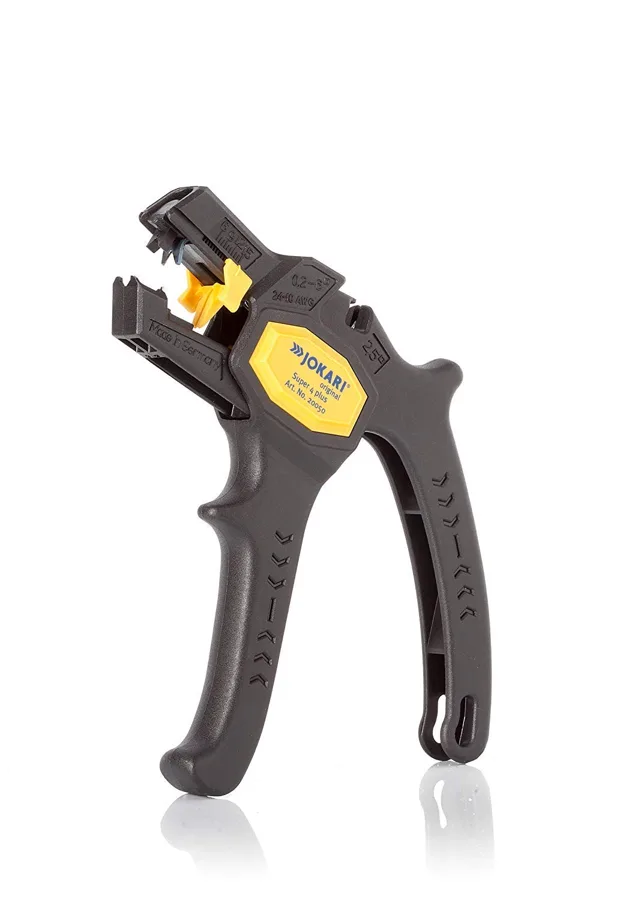
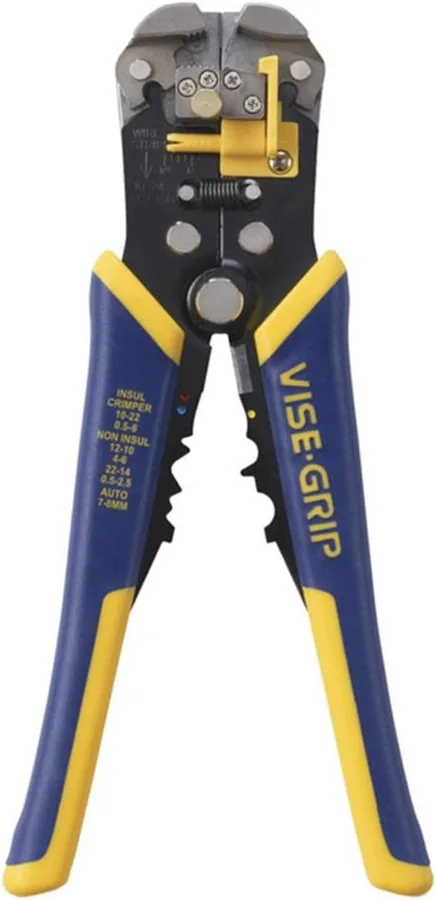
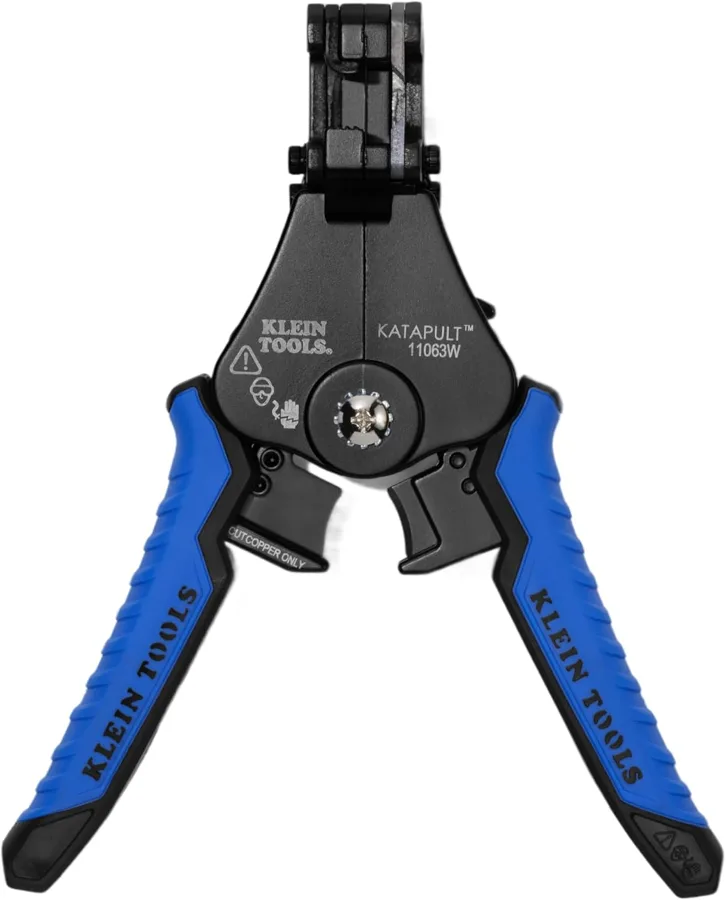
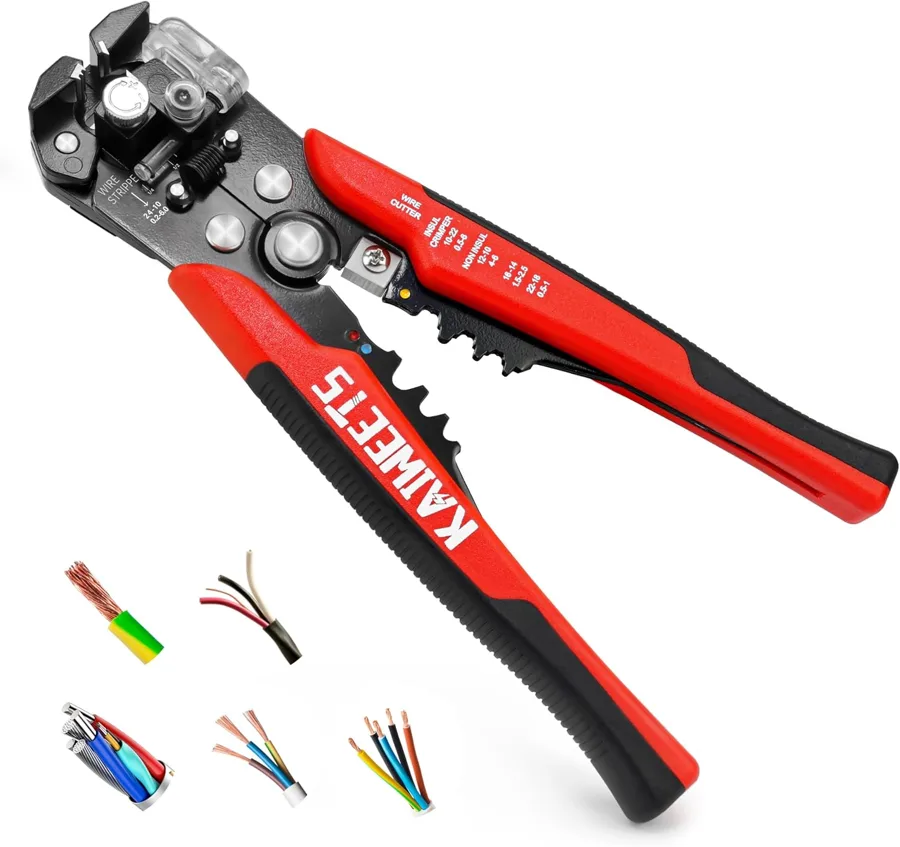
We Compared the Leading Automatic Wire Strippers. Here's Why SnapBare is #1:
 Written by Emma Collins
The fix is not another notch plier. It is knowing what a good automatic stripper must do, then checking each model against it. The useful questions are how a tool handles thin wire, how its stop is set and which wires it covers.
What should you look for? An automatic wire stripper earns its place when the strip length can be set and repeated, when the blade is a hard steel, and when the grip feels cushioned in your palm. Add the ability to cut and crimp, and the job ends with one tool. Wire range matters too, because a tool that stops at thin gauges sends you back to the toolbox for thick runs.
That is why a comparison was needed. Specs, materials, size charts and buyer feedback point to different strengths, and a strong headline does not always survive a look at the details. So we lined up five models and went through them one criterion at a time, before you spend anything on the wrong one.
Here's what we found.
How We Compared Them
We compared five automatic wire strippers on four criteria: Tension and Stop Control, Build and Materials, Grip Comfort and Built-In Functions. Each model was scored on how well its published design answers what buyers say they need from the tool.
The comparison drew on published specs, blade and body materials, dimensions and weights, strip and crimp ranges, handle design and real buyer feedback where it exists. This is a paper comparison, not a workshop trial. Where a model gave us less to go on, we scored only what its facts showed.
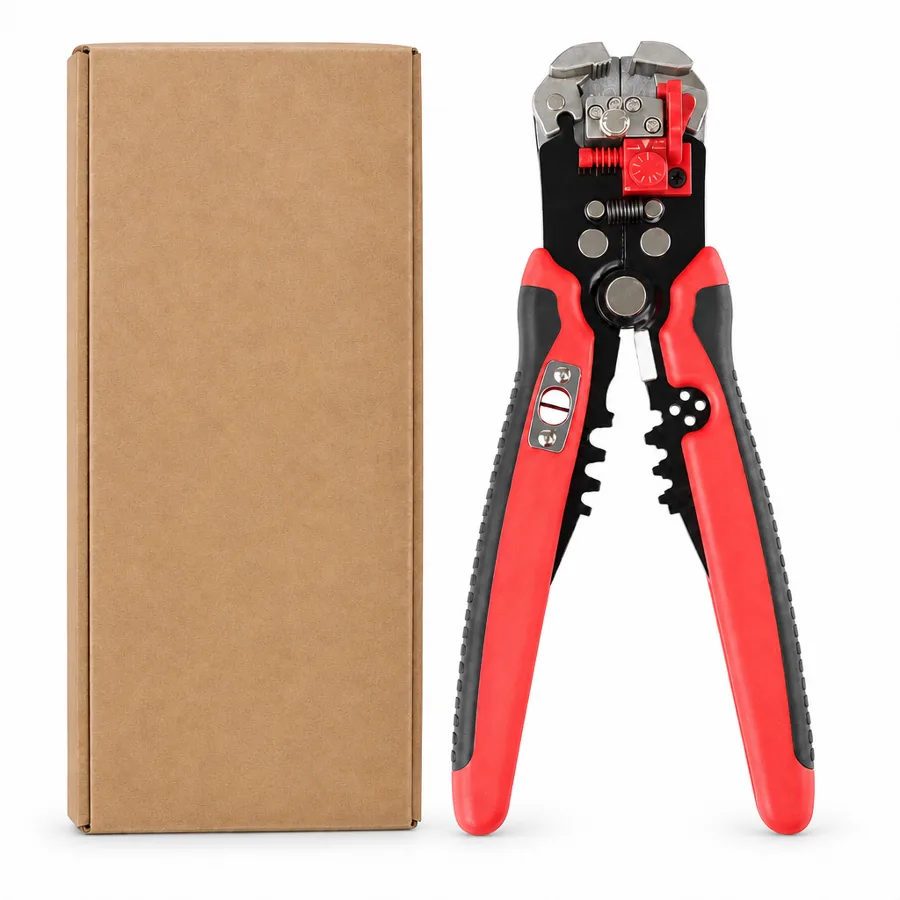
The comparison put SnapBare first because of how much it does in one hand. A spring pulls the insulation off with a single squeeze, an adjustable stop sets the strip length, and the 5-in-1 Red covers 0.2 to 10 mm² (7 to 24 AWG), the thickest range of the five. Cutting, crimping, wire splitting and coiling all sit in the same body.
Secondary strengths backed that up. The blade is S2 alloy tool steel, the body is carbon steel with soft plastic, and the grip is hard PP under soft TPR. At 205 mm (8.07 in) long and 0.34 kg (0.75 lb), it is shorter than the IRWIN Vise-Grip, and the jaws carry crimp marks for insulated and non-insulated terminals from 0.5 to 6 mm² (10 to 22 AWG).
One honest limitation: this is a two-model product. The numbered tension dial, the splitting hole and the coiling holes appear only on the Red, while the Blue economy model has a lever and screw stop and a range of 0.2 to 6 mm² (10 to 24 AWG). That is a minor choice, because you pick by the thickest wire you strip.
The Results:
SnapBare is our top pick because it strips in one squeeze, lets you set the length and finishes the job with cutting and crimping in the same hand.
Value
With this tool you stop hunting for the right notch. One squeeze and an adjustable stop repeat the same strip length wire after wire, so the knife stays in the drawer. You also stop swapping tools to trim and crimp, because the cutter blade and crimp jaws sit in the same head.
Keep the knife and notch pliers and you keep paying for it: a nicked conductor you only find later, a connection you redo, a second tool you reach for to crimp. A cheap auto that slips gets replaced, then replaced again. Those small losses add up across every fixture and repair.
The build gives you reason for confidence. The blade is S2 alloy tool steel, the body is carbon steel with soft plastic, and the handle is hard PP with a soft TPR layer. Choose the Red for a wider wire range or the Blue for everyday strip, cut and crimp. Either way, you own one tool that covers the whole job.
Wire work that ends with the tool still in your hand
Picture swapping a light fixture on a Saturday. You slide the wire in, set the stop, squeeze once, trim the end and crimp the terminal, all without reaching for a second tool. The job moves, and so do you.
The same routine suits homeowners, renovators working through a kitchen remodel and electricians on repair jobs. If your work involves HVAC or auto wiring, check your wire gauge is within 0.2 to 10 mm² (7 to 24 AWG) for the Red. The Blue economy model fits everyday jobs up to 6 mm² (10 AWG).
Frequently Asked Questions
Choose the Red if you strip thicker wire or want splitting and coiling. Choose the Blue economy model for everyday strip, cut and crimp. The Red covers 0.2 to 10 mm² (7 to 24 AWG) and the Blue covers 0.2 to 6 mm² (10 to 24 AWG).
Yes, a flat cutter blade is built into the head on both models, so you can trim a wire and strip it with the same tool. For thick cable beyond the strip range, keep a dedicated cutter handy.
Yes. The jaws crimp 0.5 to 6 mm² (10 to 22 AWG) and carry marks for insulated and non-insulated terminals. Match your terminal to the slot and squeeze.
The Red is made for round PVC-insulated copper wire, multi-core flexible cable and shielded cable. It covers 0.2 to 10 mm² (7 to 24 AWG), so measure your wire against that range before you choose. The Blue economy model covers 0.2 to 6 mm² (10 to 24 AWG).
On the Red, the numbered dial runs from 1 to 10 with plus and minus marks, so you can adjust the strength to match thin wire. The range reaches 24 AWG (0.2 mm²). The Blue economy model has a lever and screw stop but no dial.
This model adds splitting and coiling and a Red range to 7 AWG. IRWIN adds ignition-terminal crimping and a lifetime guarantee, and Klein focuses on stripping and cutting for 8 to 20 AWG solid and 10 to 22 AWG stranded wire. Pick by the extras you need.
Splitting is a hole in the handle plate for branching wires apart. Coiling uses holes marked COILING for winding wire. Only the Red 5-in-1 has them.
The blade is S2 alloy tool steel, the body is carbon steel with soft plastic, and the handle is hard PP with a soft TPR layer. The hard core gives the grip its structure, and the soft layer cushions your palm as you squeeze.
Purchase and Delivery Process
Ordering our top pick comes down to one choice, the model. Pick the Red 5-in-1 for thicker wire up to 10 mm² (7 AWG) plus splitting and coiling, with the numbered tension dial.
Pick the Blue 3-in-1 for everyday strip, cut and crimp on 0.2 to 6 mm² (10 to 24 AWG). Both models carry a cutter blade and crimp 0.5 to 6 mm² (10 to 22 AWG).
Measure the thickest and thinnest wire you strip, then match them to the range of the model you choose.
Where Can I Buy the SnapBare?
Getting your own SnapBare with a 50% discount is simple. Just follow these steps: