

We Compared the Leading Dental Loupes. Here's Why UprightSight is #1:
 Written by Emma Collins
Owners usually try the obvious next steps: a stronger pair that narrows the view, a lamp added later, or a frame that sits badly over their own glasses. Each one fixes a single complaint and creates another. You still end up leaning in, or stopping mid-procedure to fiddle with the fit.
So the smarter move is to check a few things before you buy. Look for a working distance that fits how you sit, with room to adjust rather than one number to chase. Then match the magnification to your work: closer detail narrows the view, while a wider view gives you more room around the tooth.
Next, check how the frame fits with your own glasses, whether a headlight is part of the deal, and what arrives in the kit. Those details decide whether a loupe becomes part of your day or ends up in a drawer, and they separate these five models more than any headline number. That is why we put them side by side.
Here's what we found.
How We Compared Them
We compared five dental loupes on paper, never at a bench. Our editorial team set each model's specs, materials, working distance, field of view and kit contents side by side, then added the buyer ratings that come with the market models. Four criteria shaped the ranking: Working Distance, Magnification and Optics, Comfort and Adjustability, and Kit and Value.
Each score reflects how well a model's own facts serve that criterion and how it stacks up against the other four. We only credit a model for what its details show. Buyer ratings add context but never set a score on their own, so use our numbers as a guide to narrowing your shortlist.
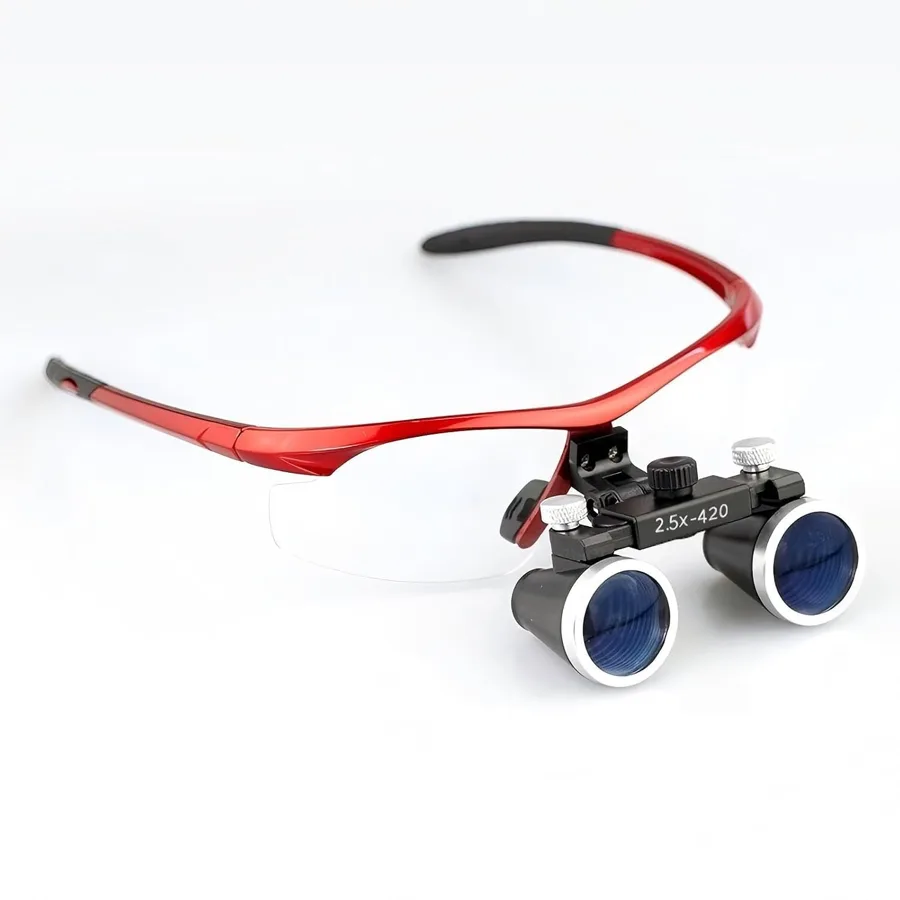
Our top pick led on adjustability. It offers 2.5x or 3.5x magnification and an engraved 420 mm (16.5 in) working distance, with a range of 320-420 mm (12.6-16.5 in) in which you can find your best spot. At 3.5x you get a 60 mm (2.4 in) field of view and 80 mm (3.1 in) depth of field. At 2.5x the view widens to 100 mm (3.9 in) with 90 mm (3.5 in) of depth.
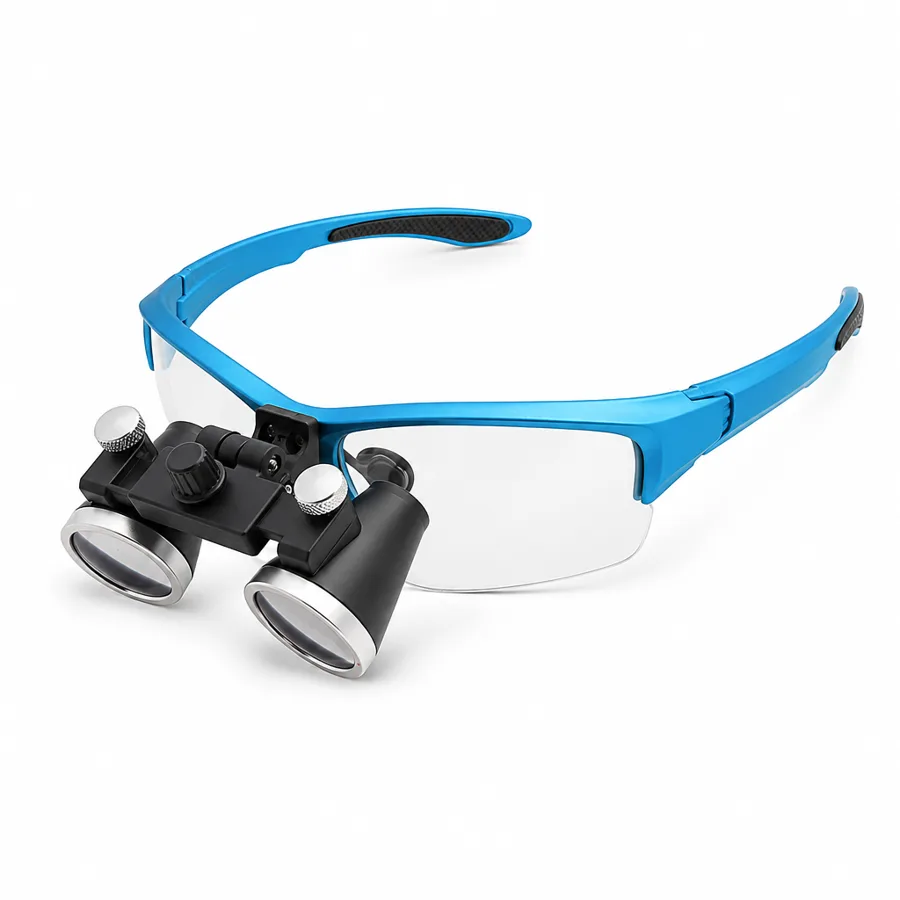
Secondary strengths add up. A free replacement clip lets you wear it with myopia glasses, and the kit brings the cloth, cord and hardware you need to set it up. Frames come in blue, purple or silver, depending on the magnification.
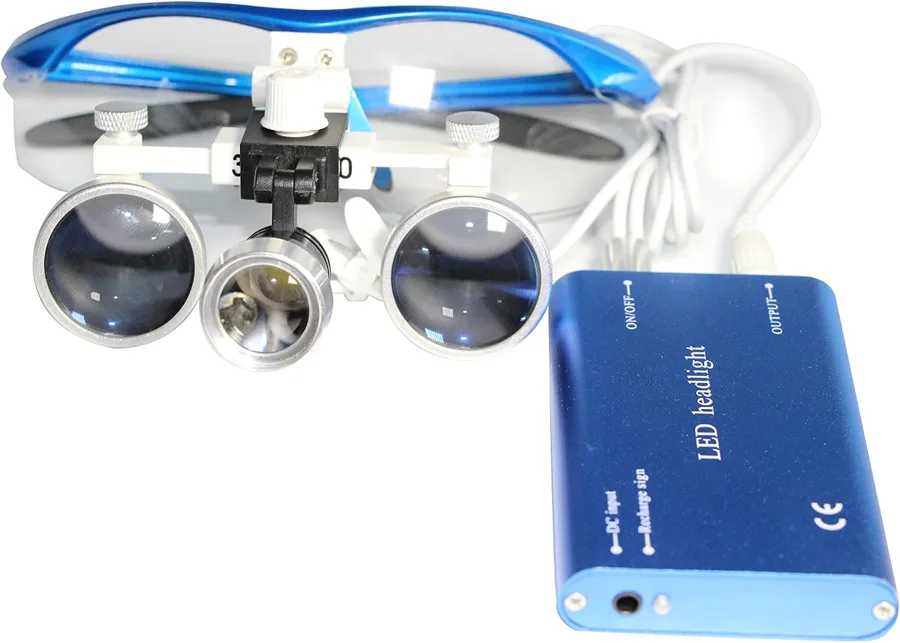
The one honest limitation is the light: you add your own headlight. That is minor for anyone who already owns one, and it means you choose the lamp you prefer.
The Results:
UprightSight is the top pick because it gives you a choice of 2.5x or 3.5x, an adjustable working distance and a clip for your myopia glasses in one kit.
Value
With the right loupe, you stop leaning in to find the edge. No more squinting, no more borrowing a classmate's pair, no more rummaging for the clamp or cloth when you set up. You put it on, add your headlight and get to the work.
The cost of doing nothing is quiet but real. Another year of leaning in to find the edge, a cheap pair you replace when the distance never fits, and makeshift fixes that keep your attention on the problem instead of the patient.
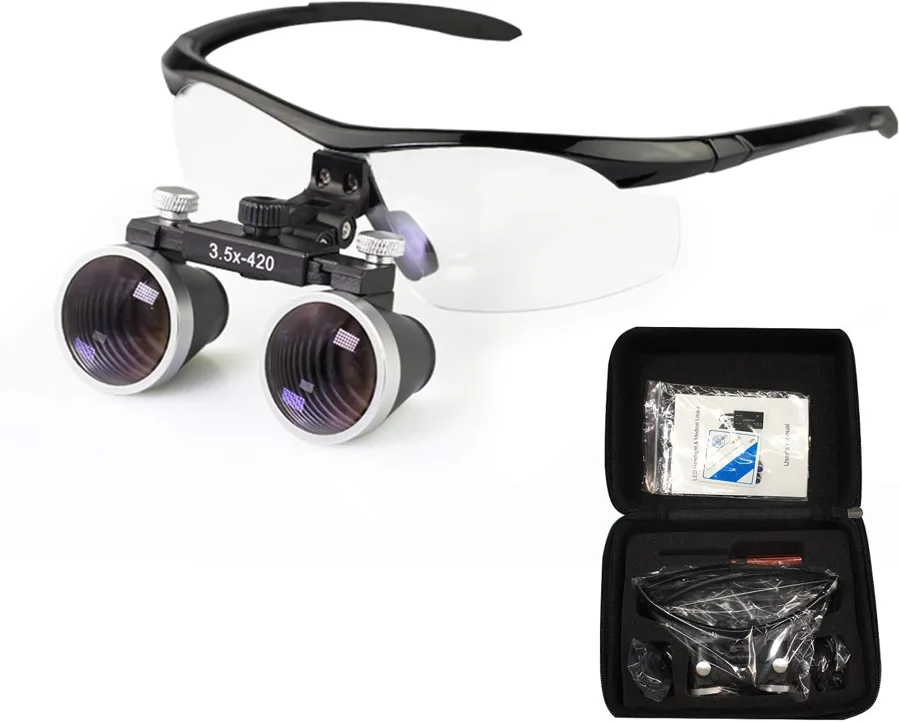
Build is where our top pick earns long-term confidence. Knurled knobs give you something to grip when you fine-tune the fit, and the kit includes screws and nuts for the frame. A half-rim sport-style frame carries the clear lens, and the choice of 2.5x or 3.5x means one pair can follow your work. It is a confident, practical pick.
Your Next Shift, Looking Up
Picture the next crown prep or a full day of scaling. You settle into a working distance that feels natural, the margin sits close through the lens, and your myopia glasses stay on with the clip. Between patients the loupe hangs from its neck cord, ready for the next set of hands.
Dental students in preclinical sessions, hygienists covering a second operatory, and new dentists who already own a headlight all fit. So does anyone who wants a spare pair for another room, since the 2.5x and 3.5x options let you match the work you do there.
Frequently Asked Questions
Yes. The kit includes a glasses clip, and a free replacement clip lets you wear the loupe together with myopia glasses. A video tutorial is available through customer service.
Choose 3.5x for the closest look at small detail, with a 60 mm (2.4 in) field of view and 80 mm (3.1 in) depth of field. Choose 2.5x for a wider view, with 100 mm (3.9 in) of field and 90 mm (3.5 in) of depth. Pick by the work you do most.
No. The loupe-only options come without a light, and the loupe is meant to be used with a headlight you add. Pair it with one you already own and you are ready to work.
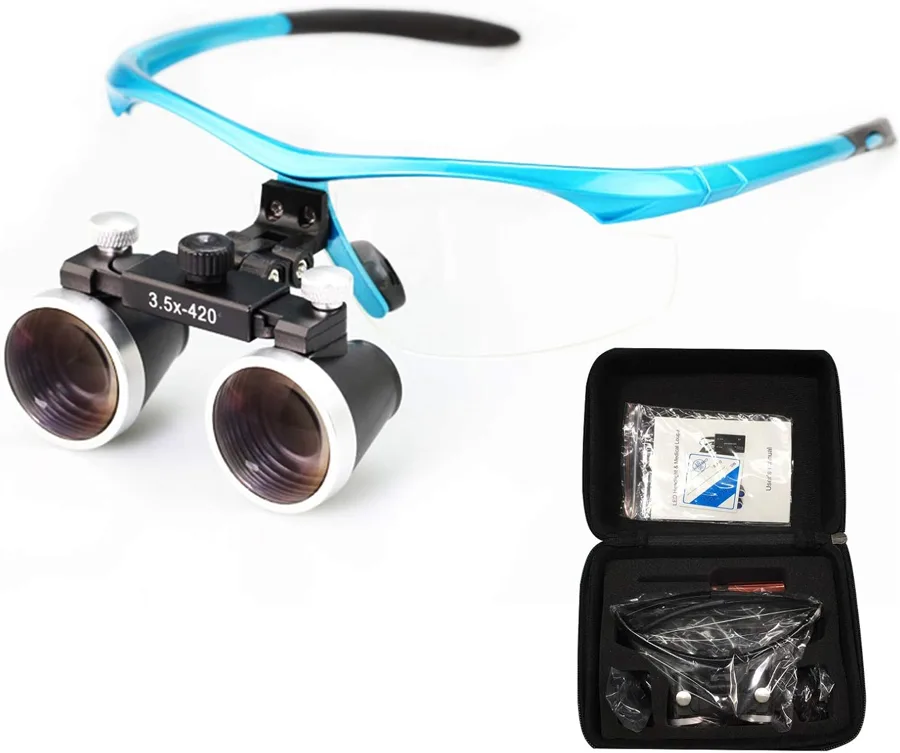
You get the loupe on its frame, a black cleaning cloth, a neck cord, a wire clamp, a glasses clip, and screws and nuts. It is everything you need to set up and wear it.
It is described for adults, for dentists inspecting teeth and for oral examination. Hygienists and dental students can choose 3.5x for closer detail or 2.5x for a wider view, depending on the task.
The loupe has an engraved 420 mm (16.5 in) distance and room to find your best spot within its range. That lets you settle into the position that suits your arms and your chair.
A neck cord comes in the kit, so you can wear the loupe on it between patients and keep it close at hand for the next one.
The 3.5x loupe comes with a blue or purple frame, and the 2.5x loupe with a silver or blue frame. All of them have a clear wrap-around shield lens in a half-rim sport-style frame.
Purchase and Delivery Process
Ordering is straightforward. Open our top pick's store page, choose your magnification and frame color, and add it to your cart. Remember that the loupe-only options need a headlight of your own.
The store page shows the current offer, the options and the delivery details, so you can check everything before you confirm. Take a moment to choose between 2.5x and 3.5x based on the work you do most.
Where Can I Buy the UprightSight?
Getting your own UprightSight with a 50% discount is simple. Just follow these steps: