

We Compared the Leading Electric Linear Actuators. Here's Why LidLark is #1:
 Written by Emma Collins
Once you know a stronger rod is only part of the answer, check three things before you buy. First, the force margin: choose a rating well above the lid's weight, because leverage near a closed lid multiplies the load, so a lid that feels modest can ask several times that from the rod. Second, mount it so the push runs in line with the rod and it takes no side load.
Third, look at what the kit asks you to supply. A way to reverse direction, pins that let both ends pivot and a body that fits your gap decide whether the weekend ends with a working lid or a parts run. If the lid sits beside a bed, the sound rating matters too, along with a housing that handles dust.
That is why the comparison was needed. Every electric linear actuator here looks alike in a search, yet strokes run from 6 in (150 mm) to 30 in (760 mm), and force, sound and parts differ more than the photos suggest. So we set the five side by side, and the gaps decided the ranking.
Here's what we found.
How We Compared Them
We compared the five on four criteria: Lifting Force, Quiet Operation, Kit Completeness and Build and Protection. They come from what buyers of an electric linear actuator weigh most, from force against a real load to what sits in the box.
This is a desk comparison of published information. We read the specs, housing materials, ingress ratings, stroke and length figures, and the design of the mounts and switches. We then set that beside real buyer feedback, including what owners praise and what they report as slow, loud or unreliable. Every score reflects that paper comparison only.
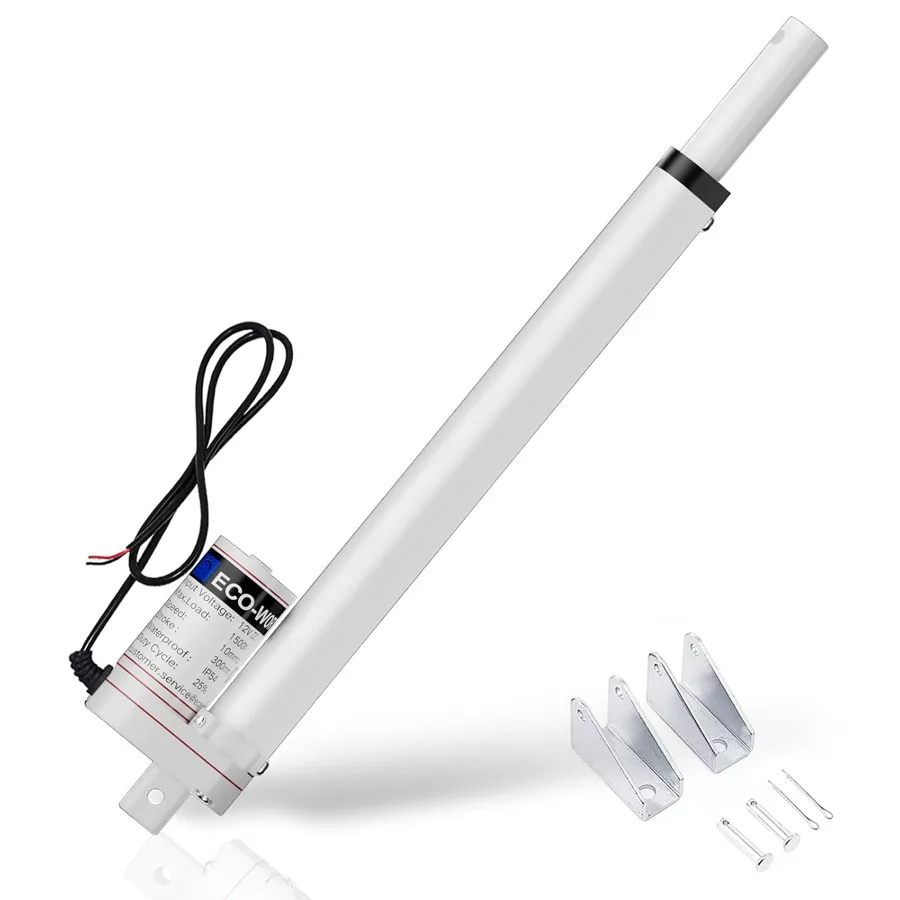
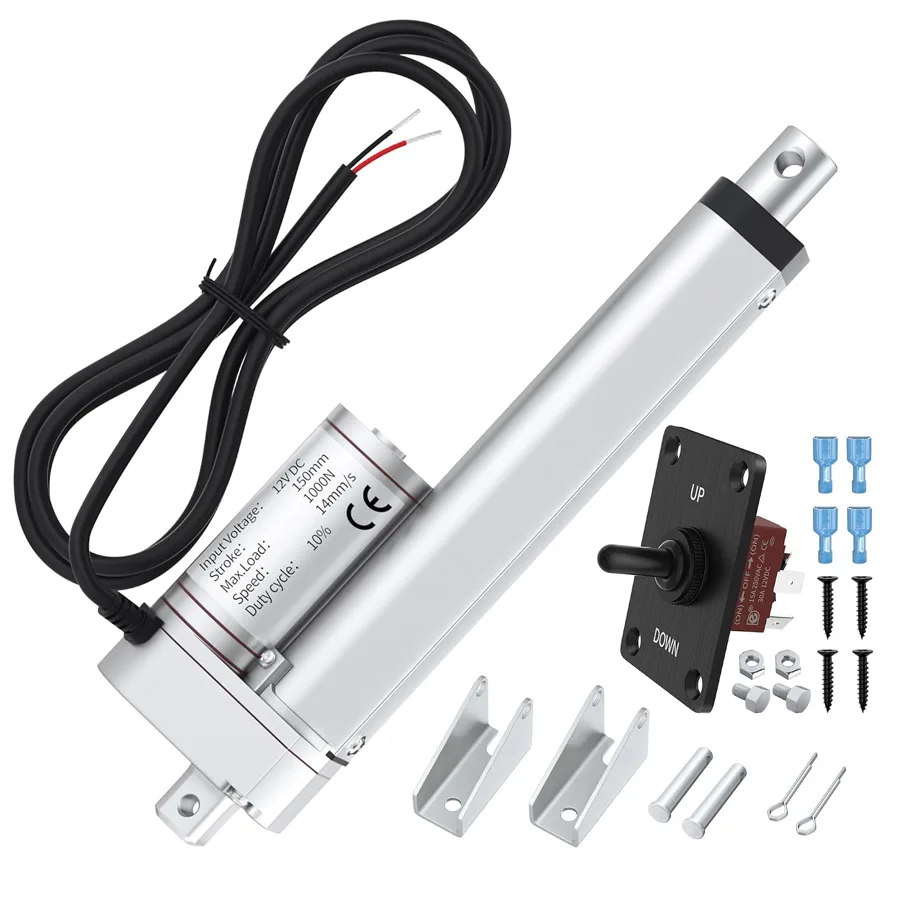
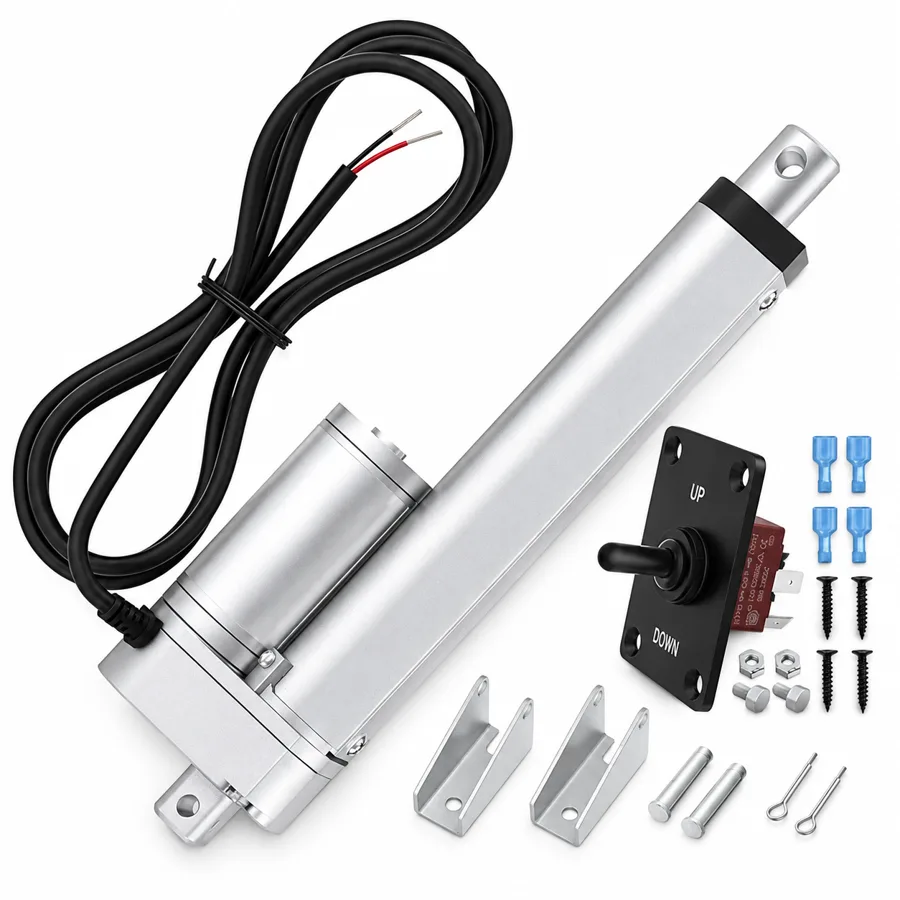
On paper, our top pick wins by combining three things the others split. It pushes and pulls up to 1500N (about 337 lbf), runs below 50dB and ships with a switch, two U-brackets, clevis pins, cotter pins and crimp terminals. Only one rival matches the force: ECO-WORTHY also lists 1500N but a below 55dB rating, while DC HOUSE and RVMARINEPAT list 1000N.
Secondary strengths add up. The aluminum alloy housing carries an IP54 rating against dust and splashes, a built-in limit switch stops the rod at each end, and the self-locking gear helps hold a lid in place. At 273 mm (10.75 in) retracted it also takes less room than DC HOUSE, which closes at 370 mm (15 in).
One honest limitation: its rated duty cycle is 10%, and its 10 mm/s (0.39 in/s) speed is slower than the 14 mm/s (0.55 in/s) rivals. That is minor for lids, hatches and windows you move now and then, where a steady, quiet lift matters more than a race to the end of the stroke. You also bring your own 12V DC supply.
The Results:
LidLark is our top pick because it turns a stubborn lid into a one-flick lift, with every part for mounting it already in the box.
Value
With this kit you stop propping lids on one shoulder, stop hunting for the right switch and brackets, and stop improvising a bolt-and-clip fix. You wire it, mount it straight and flick to lift. The lid does the rising, you do the reaching.
Doing nothing has a cost too. A gas strut that fades, a broom handle wedged under a lid, a cheap actuator replaced after one bad lift: each one eats time, and every heave in between costs you effort. Buying twice is the slowest way to fix it.
The build backs the plan. An aluminum alloy housing with IP54 protection, a built-in limit switch, a self-locking gear and two pivoting U-brackets with clevis pins and cotter pins help the actuator stop at the ends, hold position and take a straight push when it is mounted in line and run within its 10% duty cycle. You bring the 12V DC supply, and the rest is in the box. Mount it straight and let the switch do the work.
What Your Evening Looks Like After
You park, walk to the bed and flick the toggle. The lid rises with a low hum, below 50dB, the sheets are right there, and you stay standing with both hands free.
Others gain too: the DIY builder fitting a window opener, the van converter planning hidden storage, or the off-grid owner who wants a solar panel lifter. All of them need a compact, quiet lift with the mounting parts already in the box.
Frequently Asked Questions
Often yes. Weigh the lid, mount both ends so the rod runs in line, and check your travel against the 6 in (150 mm) stroke. Leave a generous margin under the 1500N (about 337 lbf) rating.
The parts are in the box: a toggle switch, two U-brackets with pins and four crimp terminals. You connect the cable to your own 12V DC supply, which is not included, and the switch reverses polarity so UP and DOWN work as labeled. Take your time with polarity and fusing.
IP54 covers dust and splashes, so it suits protected spots and occasional spray. It is not made to be submerged, so keep it out of standing water and heavy, constant spray.
Early failures usually come from side load or an undersized supply. Mount it in line with the pivoting U-brackets and clevis pins, power it from a 12V DC supply sized for its draw, and stay inside the 10% duty cycle. We make no lifetime promise, but those steps address the usual causes.
Yes. A built-in limit switch stops the rod at both ends, and the gear drive has a large self-locking force to help the lid stay where you leave it.
Its rated duty cycle is 10%, so plan short runs with rest in between. It suits lids, hatches and windows you move now and then, not nonstop cycling.
Operating noise stays below 50dB, which suits a bedroom or camper. You hear a low hum while the rod moves, a low hum rather than a racket.
Measure the travel you need, which must fit within the 150 mm (6 in) stroke, and the room for the closed body, which is 273 mm (10.75 in) long. The motor section is 103 mm (4.07 in) and the width at the mounting ears is 75 mm (2.95 in). Mount it straight so the rod pushes along its length, not sideways.
Purchase and Delivery Process
Open the store page for LidLark and pick the 150 mm (6 in) stroke kit. It comes with the actuator, switch, brackets, pins and crimp terminals, so you only need a 12V DC supply.
The store page shows the current offer, the options and the delivery details before you pay. Check them there, then place your order in a few clicks.
Where Can I Buy the LidLark?
Getting your own LidLark with a 50% discount is simple. Just follow these steps: