

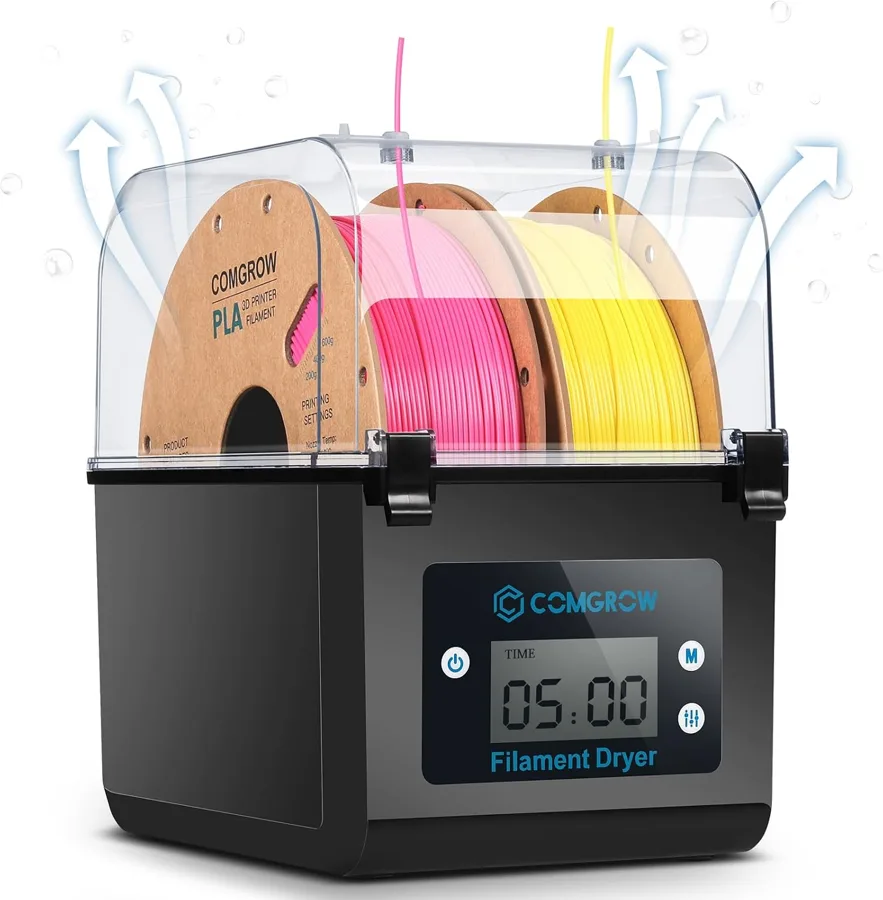
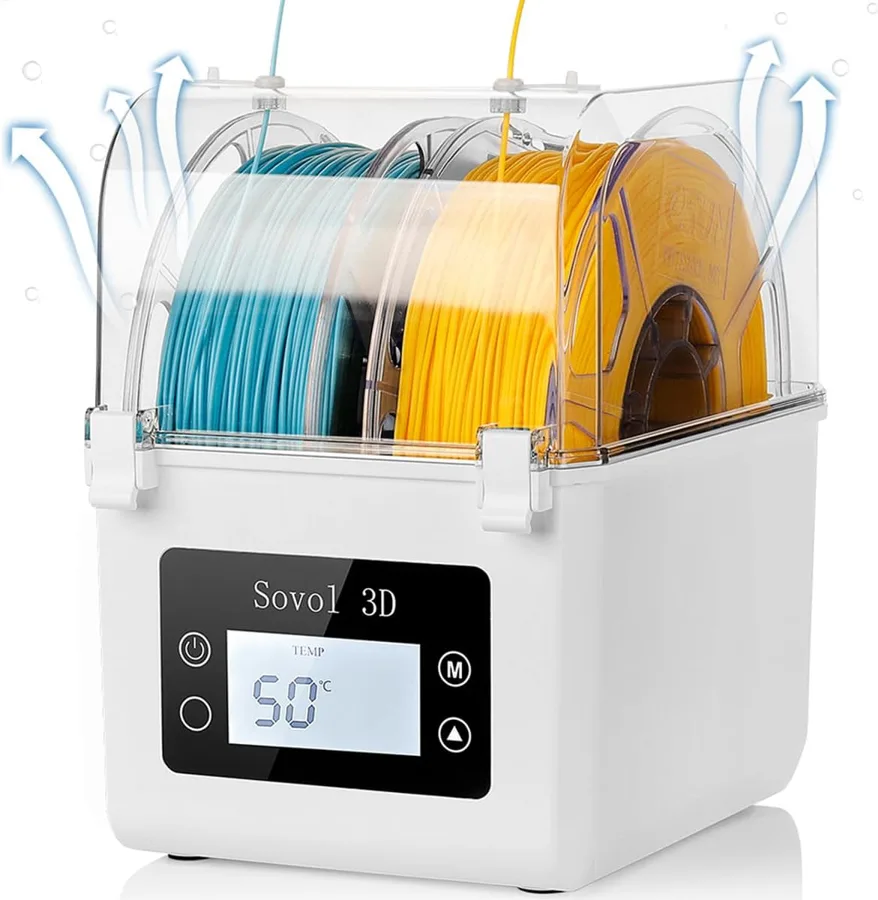
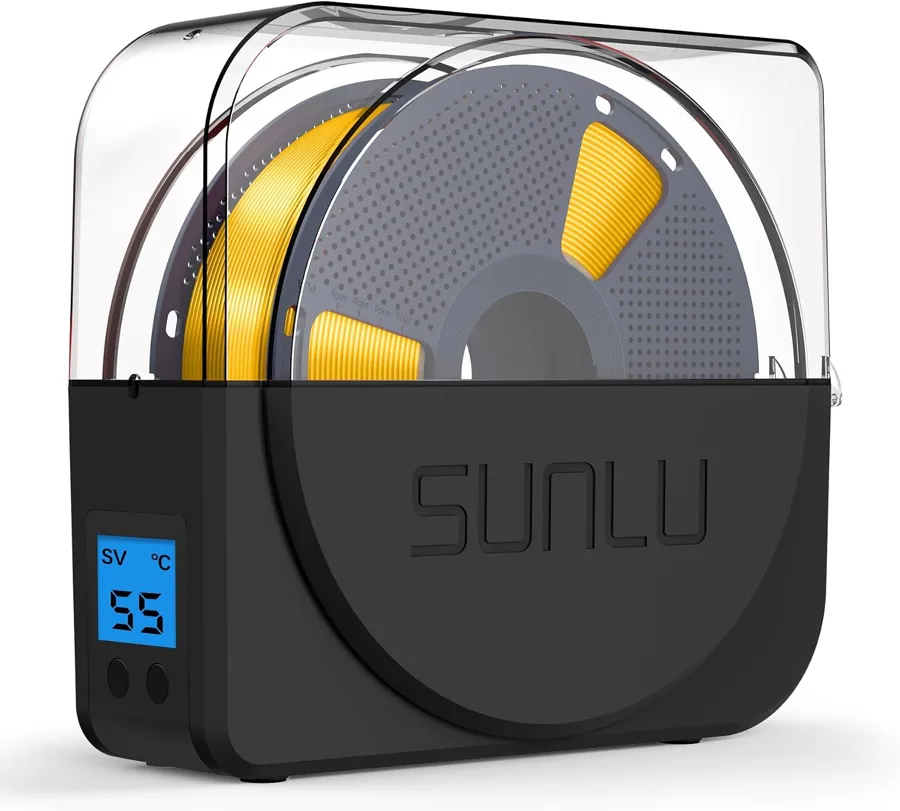
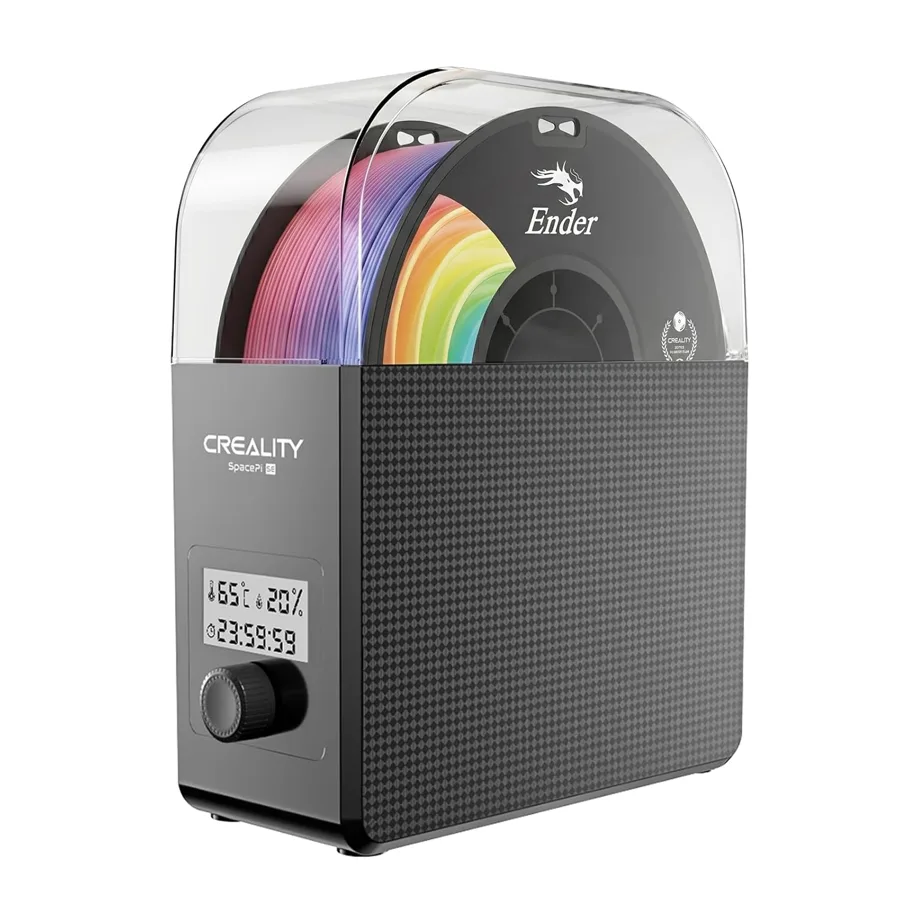
We Compared the Leading Filament Dryers. Here's Why Thermalume is #1:
 Written by Emma Collins
What those fixes share is what they lack: steady low heat, moving air and an exit for damp air. Without all three, moisture either never leaves the spool or leaves and settles straight back in. So the answer is rarely more silica or a bigger bag. It is a drying cycle you can repeat.
That narrows the search to four questions, and they became our criteria: Temperature Range, Spool Capacity, Sealing and Venting, and Print-While-Drying. Spec sheets bury all four. A 50°C (122°F) ceiling suits some filaments and not others, a tight lid can still trap steam, and a single-spool box means swapping every time you change material. A good filament dryer has to get these right together.
So we put five models side by side and compared them on paper, from heat settings to how filament reaches the nozzle. The results follow.
Here's what we found.
How We Compared Them
We compared five models on four criteria: Temperature Range, Spool Capacity, Sealing and Venting, and Print-While-Drying. For each one we weighed the specs, materials, parts, dimensions and design that the maker publishes, then set them against the five models next to it.
Nobody ran a print for this ranking; everything was compared on paper. We also read real buyer feedback on each model, including what buyers praise and what they complain about, such as heating in cool rooms or a 50°C (122°F) ceiling. Each model then received a score per criterion, weighted toward what buyers say matters most when they choose a dryer.
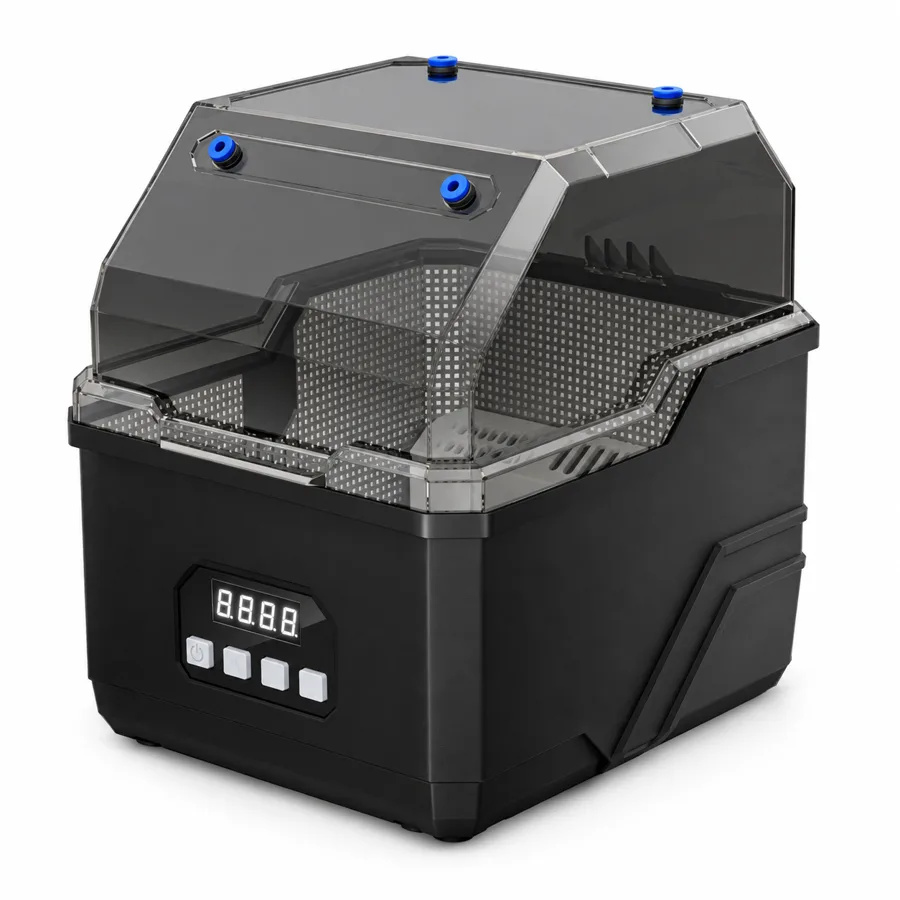
On the points buyers weigh most, our top pick led. Thermalume dries two spools at once, each up to Φ200 mm x 73 mm (7.9 x 2.9 in), with a heating plate and blower fan moving 360° hot air around them. A silicone seal strip and insulation cotton keep room air out, even when the power is off, and filament can feed to the printer through a PTFE tube while it dries.
Secondary strengths add up. A timer up to 24 hours comes with a countdown, and a built-in desiccant box holds your own desiccant. The box includes a rotating shaft, four PTFE tubes and six plugs, and the unit sits on a desk at 200 x 250 x 235 mm (7.9 x 9.8 x 9.3 in) and 1.75 kg (3.86 lb).
One honest limit: heat tops out at 50°C (122°F), and 200 g (0.44 lb) spools need a self-printed shaft. For PLA, PETG and TPU on standard spools, that limit is minor. Only nylon and similar materials call for a hotter unit.
The Results:
Thermalume is the top pick because it dries two spools at once, stays sealed when switched off and feeds your printer straight from the box.
Value
With this dryer you stop unloading spools, stop hovering over a popping nozzle, and stop carrying a spool to the oven. Load it once, set the timer, and the countdown tells you when the cycle ends.
Doing nothing has a cost too. Every spool left in open air takes on moisture, and a wet spool means stringing to clean, a part to reprint and an evening gone. Filament that snaps or bubbles after a long stay on the shelf is material you paid for and cannot use.
The build details back up your confidence. Stainless rods hold the spools, a silicone seal strip and insulation cotton protect them, and a large heating plate with a blower fan spreads the warmth. It is a sealed, straightforward design made to keep your spools ready, run after run.
Dry Spools, Quiet Nights
Picture the evening: you load the next spool, set the timer and close the lid. By morning the cycle is done, and the print starts from a dry spool feeding through its tube. The spools stay sealed and ready beside the printer.
Beyond the weekend maker, it suits anyone running two materials, from PLA with PETG supports to a school makerspace or a humid garage workshop. Two printers can each draw a spool. Anyone choosing a gift for a new printer owner will find the two-spool design a generous start.
Frequently Asked Questions
Our top pick sets between 45 and 50°C (113 to 122°F). That suits PLA and TPU and sits on the upper side for PETG, so check your spool's guidance and allow a longer cycle. Nylon usually wants more heat than this model offers.
A fully closed box can hold damp air, so open the plugged fittings while it heats to give moisture an exit, then plug them for storage. There are four fittings with silicone plugs, two on the front lid strip and two on top. Follow the manual's guidance.
Yes. Filament can feed to your printer through a PTFE tube from a fitting on the lid while the spool stays inside, so there is no unloading. Four PTFE tubes and six plugs come in the box.
Standard 1 kg (2.2 lb) spools fit, two at a time, each up to 200 mm (7.9 in) across and 73 mm (2.9 in) wide. Measure your spool's diameter and width before you order. Two 500 g (1.1 lb) spools fit as well, and a 250 g (0.55 lb) or 200 g (0.44 lb) spool fits singly, with the 200 g size needing a self-printed shaft.
Its 45 to 50°C (113 to 122°F) range is aimed at everyday PLA, PETG and TPU. Nylon and carbon-filled nylon usually call for more heat than 50°C (122°F), so check your maker's guidance. If nylon is your main material, a hotter unit is the better match.
Desiccant is not included. Heat, fan and venting do the drying, and the built-in desiccant box is optional extra protection for storage if you add your own.
We have no noise rating or sensor-accuracy figure to give you, so we will not promise either one. The 4-digit LED display shows temperature, humidity and the countdown. Judge it by the on-screen readout and the manual, and add a separate hygrometer if you want a second reading.
Drying time depends on how wet the spool is, so there is no single number. The timer runs from 0 to 24 hours with a countdown, which leaves room for a long overnight cycle on a soaked spool. Check the filament afterward and run another cycle if it still pops.
Purchase and Delivery Process
To order Thermalume, use the button on this page to open its store page, then confirm your order there.
The store page shows the delivery details for your region before you commit. In the box you get the dryer, a user manual, a power adapter with a US plug, four PTFE tubes, a rotating shaft and six plugs.
Where Can I Buy the Thermalume?
Getting your own Thermalume with a 50% discount is simple. Just follow these steps: