

We Compared the Leading Hobby Soldering Irons. Here's Why Glowmend is #1:
 Written by Emma Collins
A common reaction is to turn the heat up, feed in more solder or buy a second cheap iron. None of it tells you anything. Without a readout, you can't tell whether a bad joint came from a cold tip, a too-hot one or a worn one, so you repeat the same mistake on a fresh board.
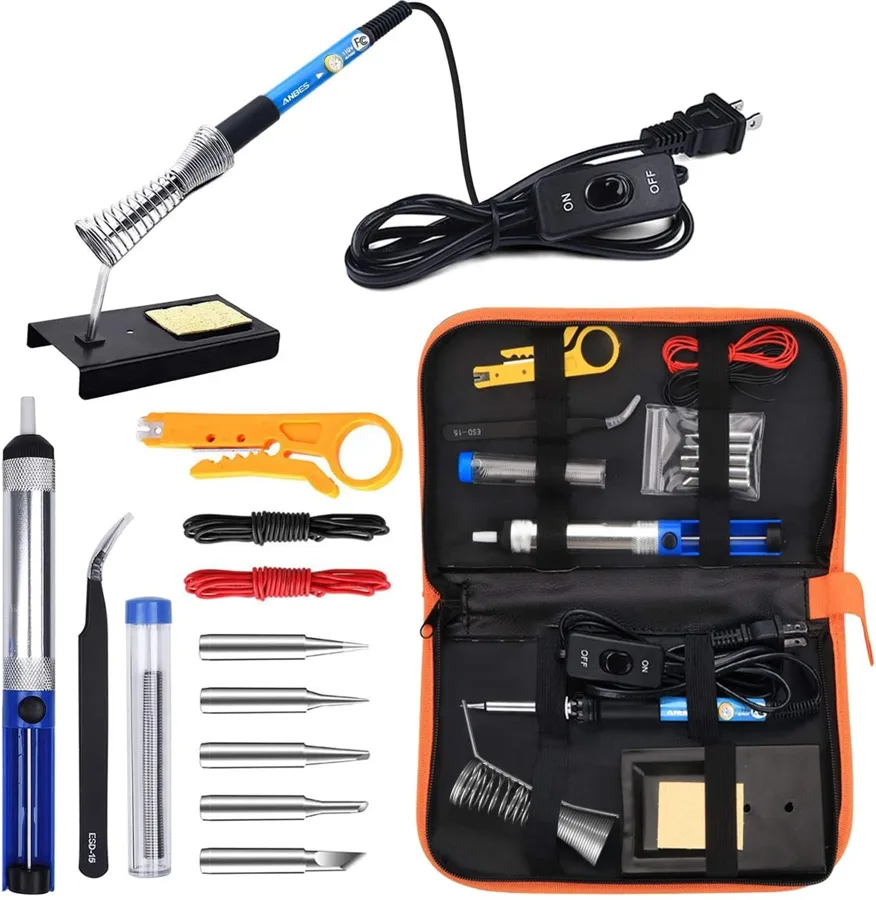
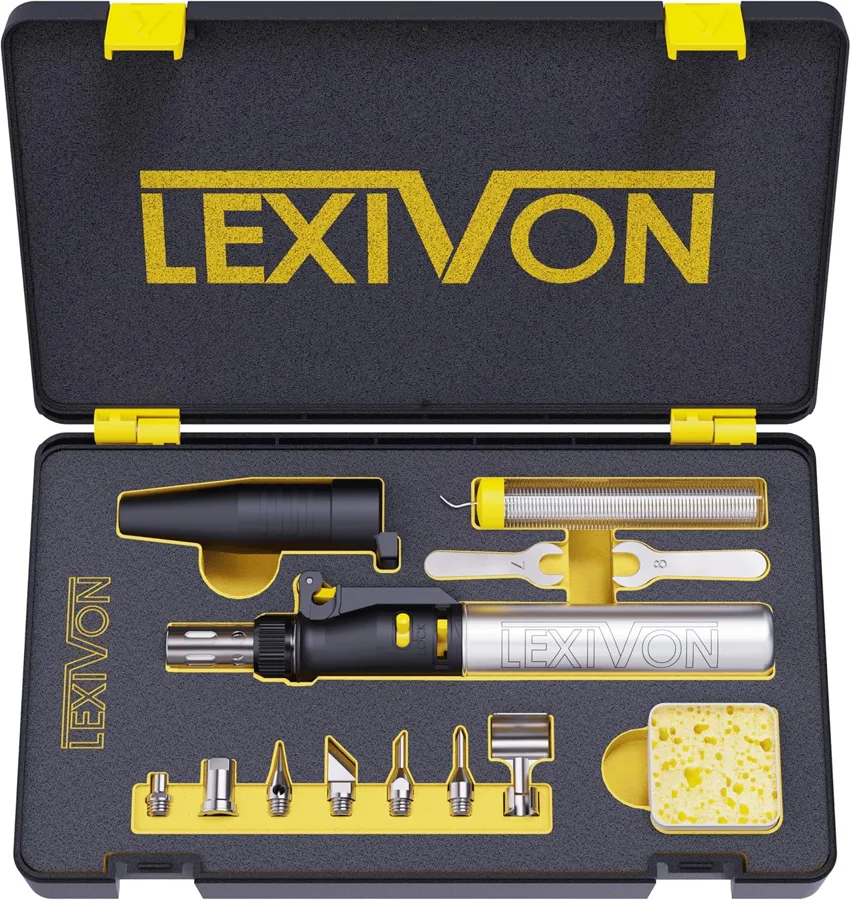
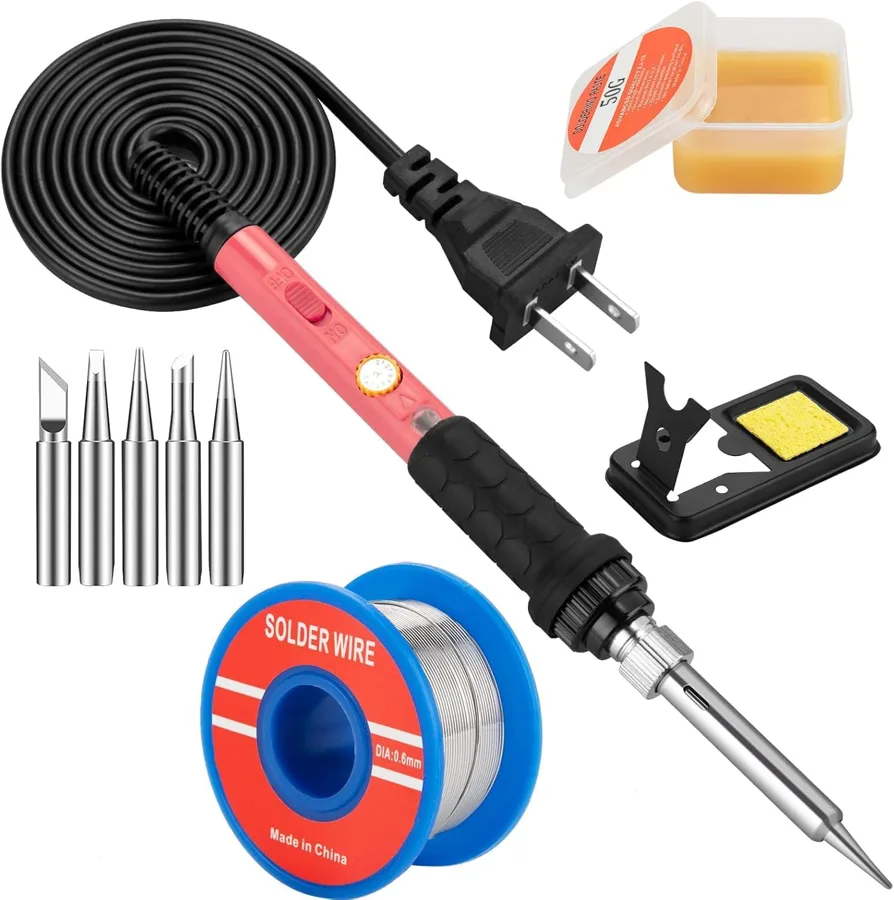
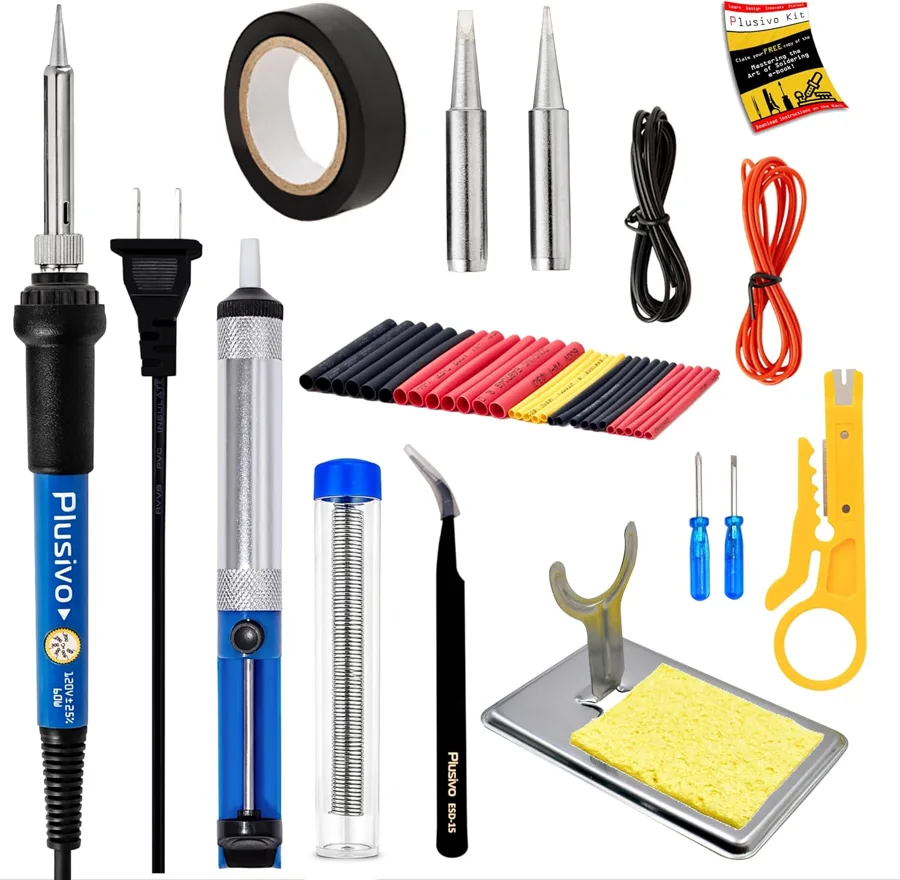
What to look for instead is heat you can see and set, tips that fit different joints, and a kit that arrives with a stand, a sponge and solder, so a weekend repair doesn't stall on a shopping trip. A handle that sheds heat matters too, because the first joint is never the last. If you're hunting for a good hobby soldering iron, those points are where budget kits differ most.
So we set all five kits side by side, on paper, to see which one earns a place on your bench.
Here's what we found.
How We Compared Them
We ranked the five kits on four criteria: Temperature control, Tip variety, Kit completeness and Handle comfort. They come from what buyers of a hobby soldering iron weigh most: seeing the heat, having a tip for each joint, starting without extra shopping and holding the iron through a long session.
This was a paper comparison. We read each product's published specs, materials, parts lists and handle designs, and for the models with public buyer feedback, we read what owners praise and what they complain about. Nobody on our team worked with these irons at a bench. The ratings on each card reflect how the facts stack up on each criterion.
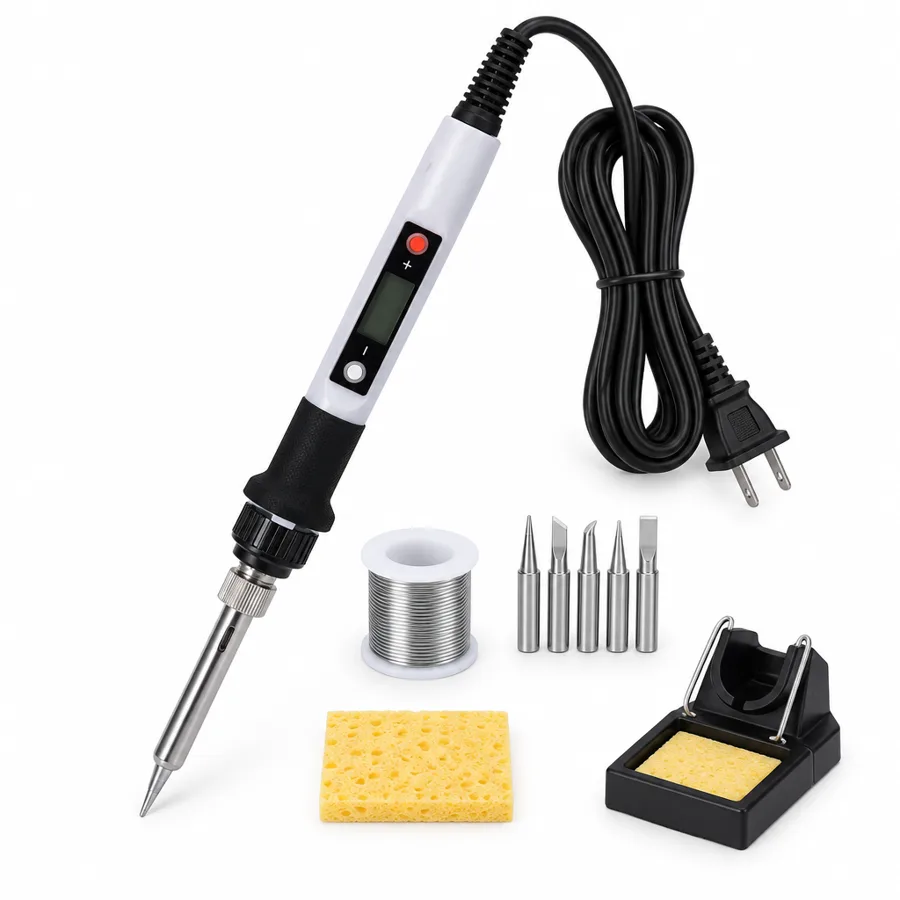
The strongest advantage of our top pick is visible, adjustable heat. An LCD shows the temperature, and the red + and white − buttons move it 1° per press, or continuously when held. The setting is remembered at the next power on. Among the other four, none publishes a readout with 1° steps and a remembered setting.
Secondary strengths each pay off. Five tip shapes let you match the tip to the joint, and the plug-in ceramic core swaps in about 5 seconds if a heater fails. The silicone grip over a heat-dissipating handle is designed for comfort. The nine pieces include a stand, a sponge and a tube of solder, so you can start at once.
The honest limit is timing. The tip reaches your setting about 30 to 50 seconds after the heater core does. That is minor, because the flashing °C or °F symbol shows progress while you tin the tip. The kit also has no desoldering pump, an easy add-on if you need one.
The Results:
Glowmend is our top pick because it turns soldering from guesswork into a setting you can see, change and repeat, in a kit that is ready for the first joint.
Value
With this kit you stop guessing at your heat. No more pressing solder against the iron to see whether it melts, and no more restarting a joint because you can't tell if the tip is ready. The stand, sponge, solder and five tips are in the box, so a Saturday repair starts when you do.
Doing nothing has a price too. A cheap iron whose tip pits in a day gets replaced, and a lighter or a borrowed iron is a gamble on a board you can't easily replace. Every restart costs you an evening, a part and some of your confidence at the bench.
The build adds a practical backup. If the heater fails, the swappable ceramic core means you replace the core, not the whole iron, and the 304 stainless steel tip sleeve gives the tip a solid housing. Your next repair starts with an iron you already know how to use.
Your Bench, After the Upgrade
Picture it: the repair is finished, the LCD still shows the heat you set, and the iron rests in its stand while the tip gets a last wipe on the sponge. Next time you plug in, your setting is waiting. The broken controller or drone works again, and you never waited on a replacement.
It fits more benches than one. Students and robotics club members get a kit ready for build night, drone and RC fixers get tips to match each joint, and parents repairing a kid's headphones get a calmer first try. It also makes a starter gift for a curious teen, in black, blue or white.
Frequently Asked Questions
The °C or °F symbol flashes while the iron heats, so you can watch it work. The tip reaches your setting about 30 to 50 seconds after the heating core does. Use that wait to tin the tip.
The LCD displays the temperature you have set, so you know what you dialed in. If the reading seems off, pressing − and + together corrects the offset, and accuracy is rated within ±3 degrees.
Five tips come in the box (conical, fine pointed, bevel, round and chisel), with a plated finish on the tip. Tips last longer when you tin them after each session, wipe them on the sponge and avoid leaving the heat at maximum. If the heater ever needs replacing, the ceramic core is a plug-in part.
It suits a first iron. You see your setting on the LCD, change it with two buttons and the iron remembers it next time. Practice on a scrap board first and keep your tip tinned.
The kit has nine pieces: the iron, a tube of solder wire, five tips, a cleaning sponge and an iron stand. You can start right away. A desoldering pump or flux paste is not part of it, so add those if your projects call for them.
Small surface-mount parts call for patience more than power. The kit includes a fine pointed tip for close work, so start with that one, add a little flux and practice on a scrap board before the real one. Keep the tip clean and tinned.
This model has no auto shutoff feature that we can point to, so do not count on one. Unplug the iron when you are done, and rest it in its stand while it is hot.
Start lower than you think you need, then raise it a degree at a time until the solder flows smoothly. The 1° buttons make that easy, and the iron remembers where you landed for next time. Practice on a scrap board first.
Purchase and Delivery Process
Ordering is quick: open the store page for Glowmend, pick black, blue or white, and add it to your cart. All three come as the same nine-piece kit with a US plug, holding the iron, a tube of solder wire, five tips, a sponge and a stand.
The store page shows the current offer, the options and the delivery details, so you can check everything before you confirm. Press confirm, and your kit is on its way to your bench.
Where Can I Buy the Glowmend?
Getting your own Glowmend with a 50% discount is simple. Just follow these steps: