

We Compared the Leading Hydraulic Crimping Tools. Here's Why BenchBite is #1:
 Written by Benjamin Carter
The fix is not a longer handle, it is a different mechanism. Pressure gets multiplied for you: each pump of a hydraulic crimping tool is turned into a firm, even hex, with the dies closing on the lug from every side.
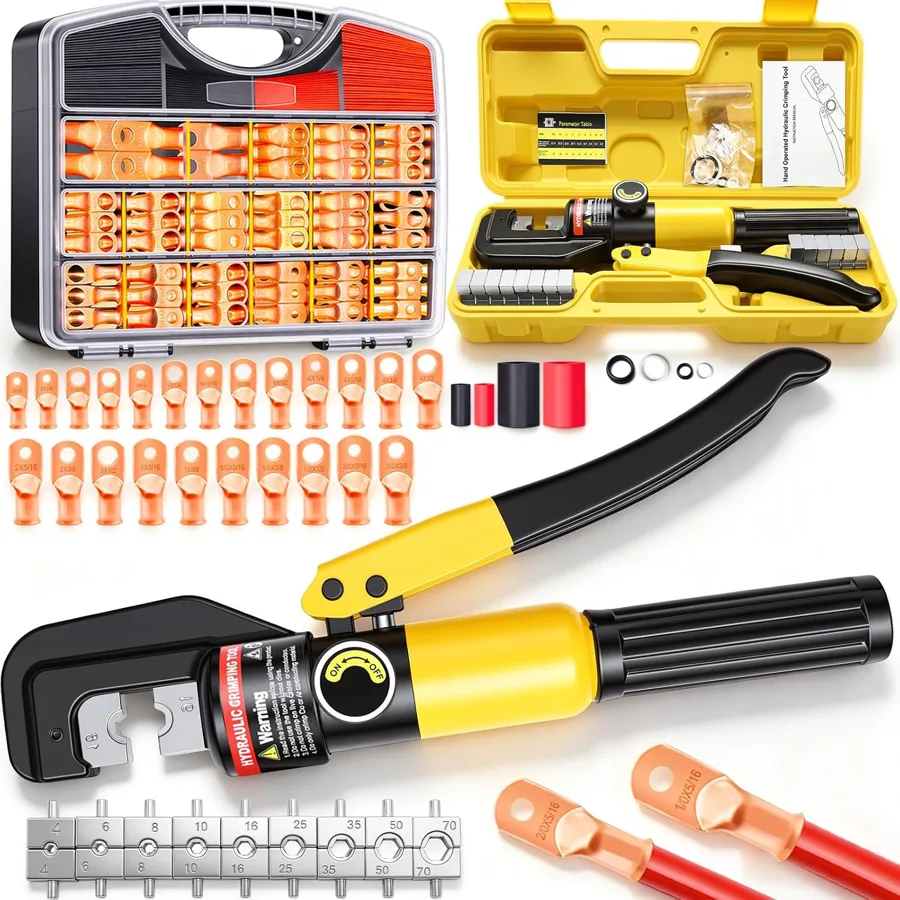
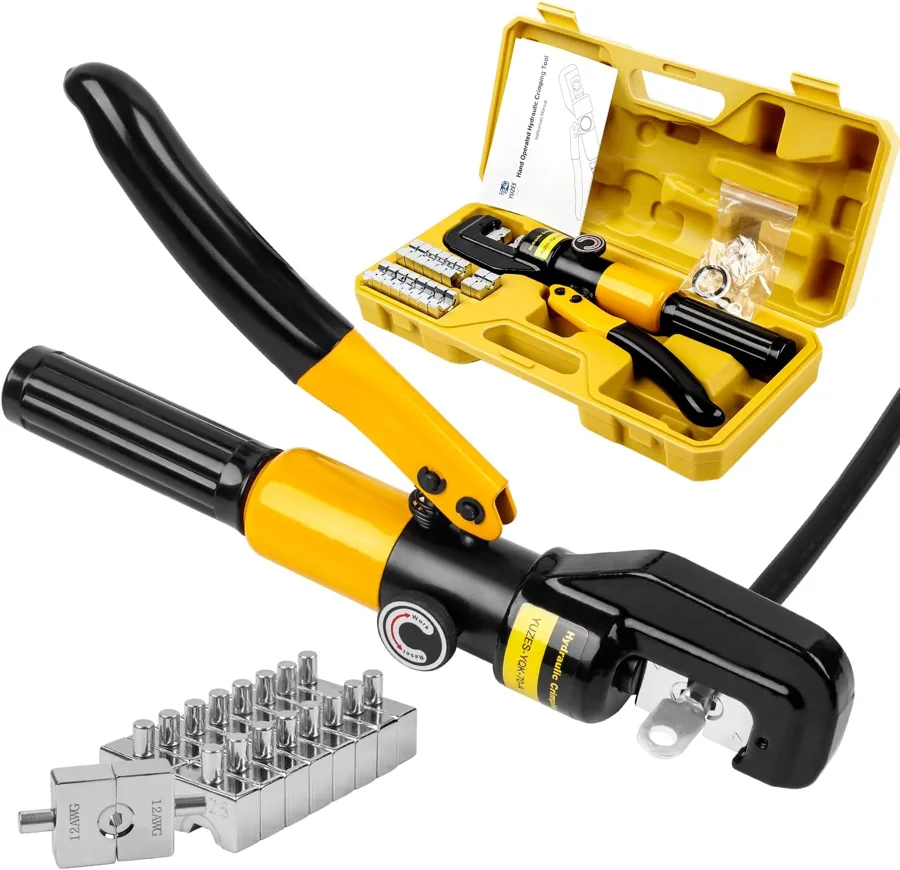
Then check four things: whether the die matches your lug and is stamped with its size, how far the cable range reaches, whether the head can get into your battery box or railing post, and whether spare seals and a case come with it. A tool that misses one of these can stall you halfway through a project.
The catch is that listings read alike: ton ratings, die counts, plastic cases. Four of the five models here quote the same 12 to 2/0 AWG range, so we lined up their published specs, parts and the buyer feedback available against what a crimping job needs and ranked them on one scale before naming a winner.
Here's what we found.
How We Compared Them
We ranked five models on four criteria: Crimping Force, Die Range, Build Durability and Kit Completeness. This is a paper comparison of each hydraulic crimping tool. We read published specs, materials, size charts, design details and the buyer feedback available, then scored every model against the same yardstick. The ratings in each card reflect those four bars.
Crimping Force looked at rated output and stroke. Die Range looked at the cable sizes each die set covers. Build Durability weighed die steel, seals and handles, and the wear comments came only from the feedback that exists, not from every model. Kit Completeness counted dies, spare seal rings and a case in the box.
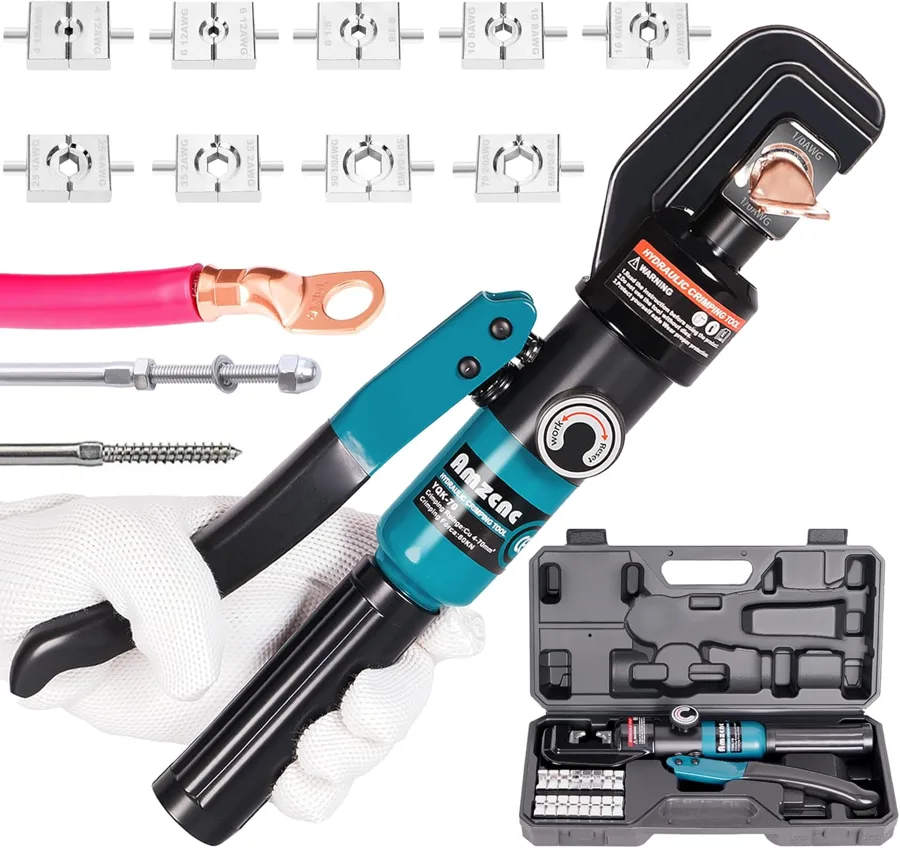
Our comparison put the top pick ahead on cable range. The YQK-70 dies cover 4 to 70 mm², and the YQK-300 options stretch to 300 mm², with up to 15 die pairs in the case. No other contender on this page goes past 2/0 AWG, so one kit follows your jobs from thin lugs to heavy ones.
Output scales with the model. The YQK-70 offers 8 tonnes with a 10 mm (0.39 in) stroke at 3 kg (6.6 lb), while the YQK-300 delivers 12 tonnes with a 20 mm (0.79 in) stroke at 6.3 kg (13.9 lb). The other four sit in the 10-ton class, so you choose between lighter work and heavier cable.
The one honest limitation: dies are sized in mm² rather than AWG, so you check your lug's size before you pick an option. It is minor because every die is stamped with its size and each option name states the range it covers. A minute with your lugs settles it.
The Results:
BenchBite is the #1 choice because it pairs the widest cable range here with a firm hex squeeze, spare seals and a carry case, all hand-pumped with no battery.
Value
With this model you stop hammering lugs and soldering in a cramped battery box. The hydraulics multiply each pump into a firm hex, so thick lugs take less muscle than with a ratchet crimper or pliers, and no outlet or charged battery is needed. You fit the stamped die, pump, release and move on.
Doing nothing has a cost. Every lug that deforms is scrap, every wire that pulls out means cutting and redoing a connection you thought was finished, and a cheap unit that stalls mid-project gets replaced anyway. Tired hands also make the last crimps of the day the sloppiest.
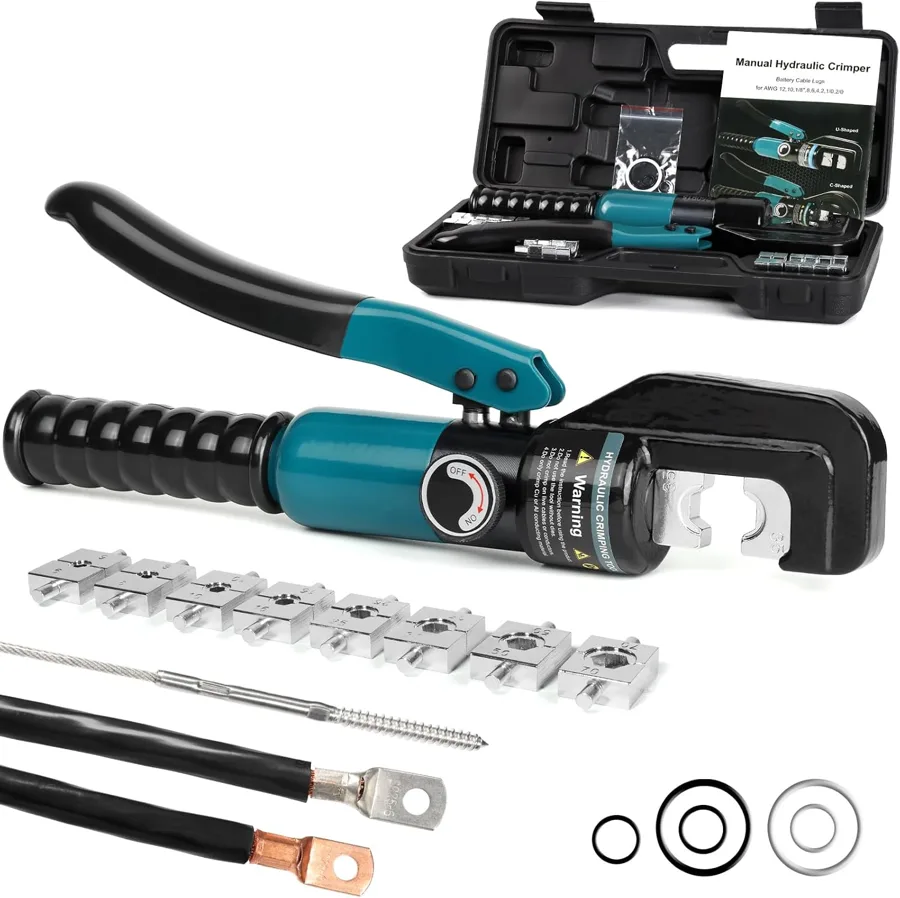
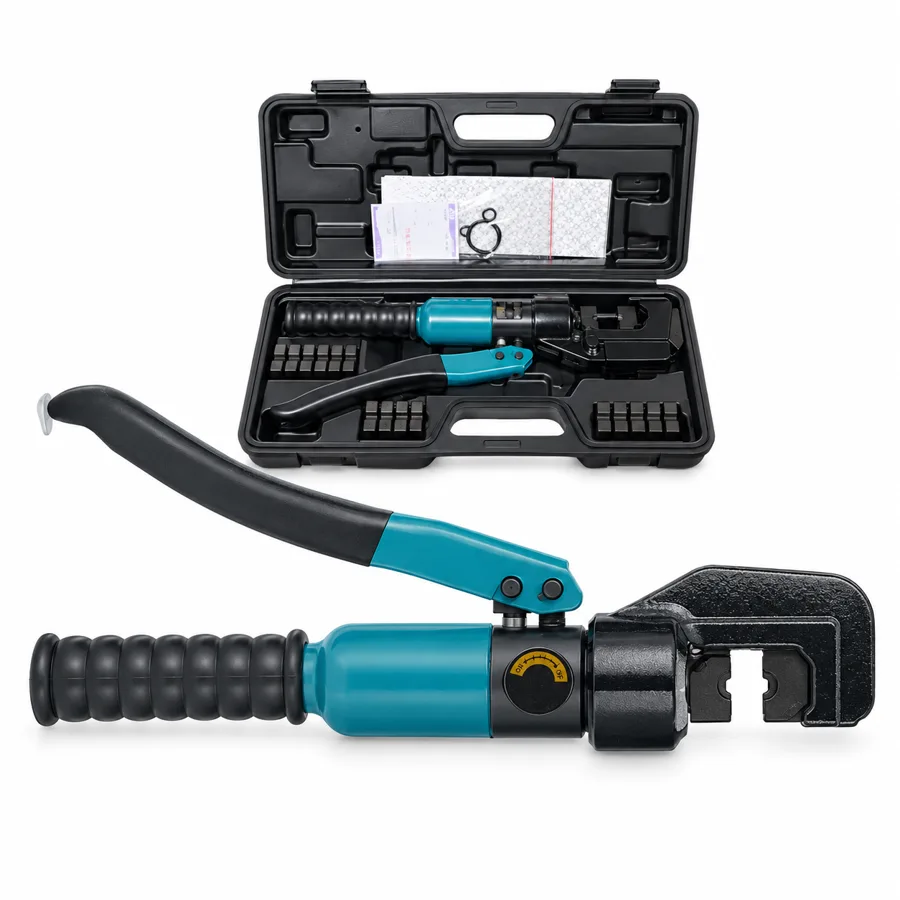
The confidence comes from what is in the box: chrome-plated 40Cr steel dies, rubber handles and a marked ON/OFF release knob. Spare seal rings sit in the case beside the dies, ready if a seal ever needs swapping. With every part in one case, you start the next crimp knowing what to reach for.
After the Last Crimp
You lay the tool in its case, the lugs on the cable sit in even hex shapes, and you give each wire a firm tug. Nothing moves. The garage, the van or the engine bay goes back to quiet, and you are on to the next connection instead of redoing the last one.
The same kit suits solar and battery builders, boat and RV owners, car audio installers and anyone repairing welding cable on a tractor or in a barn. It also makes a practical gift for the person who has been fighting thick wire with pliers.
Frequently Asked Questions
Pick the die stamped with the mm² size that matches your lug barrel, crimp, then give the wire a firm tug. If it holds and the hex looks even, you're set. The stamped sizes make matching quick.
The YQK-300 options reach 300 mm², which is well beyond 4/0 AWG. Check your lug's mm² size and pick an option whose range covers it. The YQK-70 stops at 70 mm².
Yes. Every kit comes in a plastic carry case with its die pairs and spare sealing rings, and the dies are stamped with their mm² sizes. The printed manual in the case is in Chinese, so lean on the stamped sizes and a tug check after each crimp.
BenchBite's dies are made for copper and aluminum lugs and connecting sleeves, and the kit comes with no rope die. For railing work, the Brileine in this ranking includes a 1/8 in die.
First check that the rotary knob is turned to OFF, which releases pressure and sends the oil back. Both positions are marked on the knob. If it still stalls, spare sealing rings come in the kit.
Yes. This model is made for copper and aluminum lugs and connecting sleeves. On the YQK-70 the specs list copper at 4 to 70 mm² and aluminum at 4 to 50 mm².
The YQK-70 weighs 3 kg (6.6 lb) and is 310 mm (12.2 in) long, the lighter choice for reaching up. The YQK-300 weighs 6.3 kg (13.9 lb) at 470 mm (18.5 in). Choose by the thickest lug you crimp.
Measure the thinnest and thickest lug barrels in mm². The YQK-70 with 8 die pairs covers 4 to 70 mm². The YQK-300 comes with 11 pairs for 16 to 300 mm², 12 pairs for 10 to 300 mm² or 15 pairs for 4 to 300 mm².
Purchase and Delivery Process
Open the store page for BenchBite and choose your option: the YQK-70 with 8 die pairs, or the YQK-300 with 11, 12 or 15 die pairs, all in blue. Match the die range to your thinnest and thickest lug in mm².
The store page shows the current offer, the options and the delivery details. Pick your option, add it to your cart and confirm your order.
Where Can I Buy the BenchBite?
Getting your own BenchBite with a 50% discount is simple. Just follow these steps: