

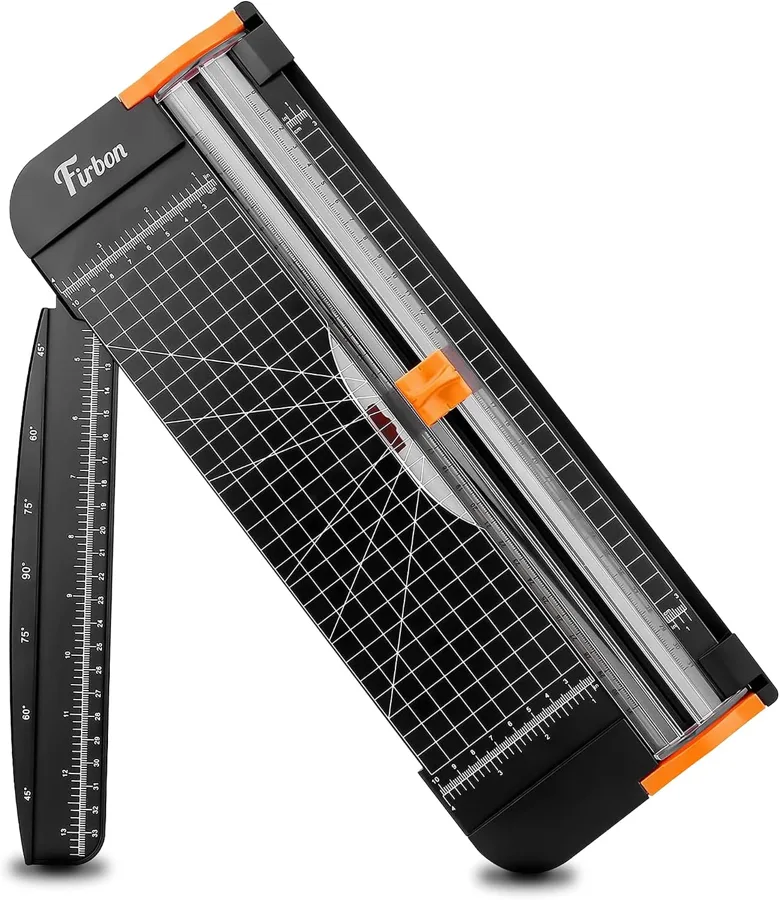
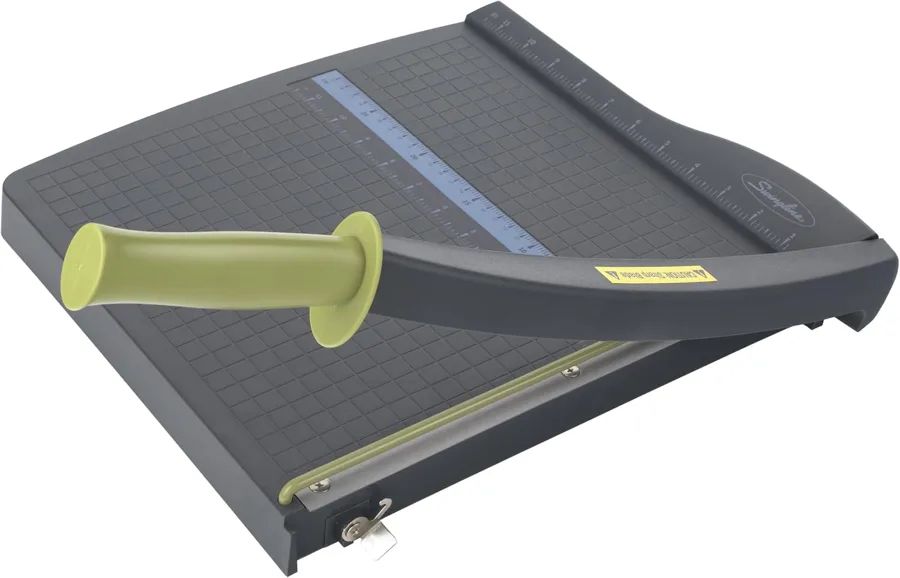
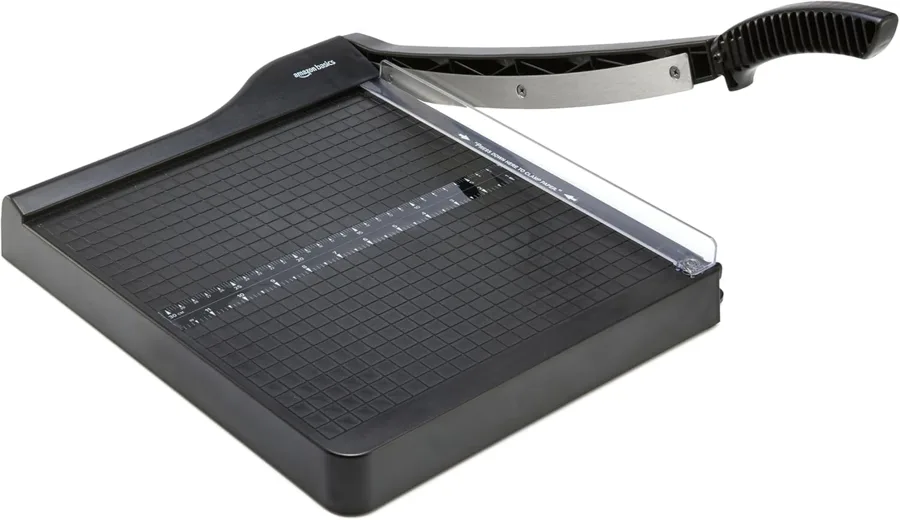
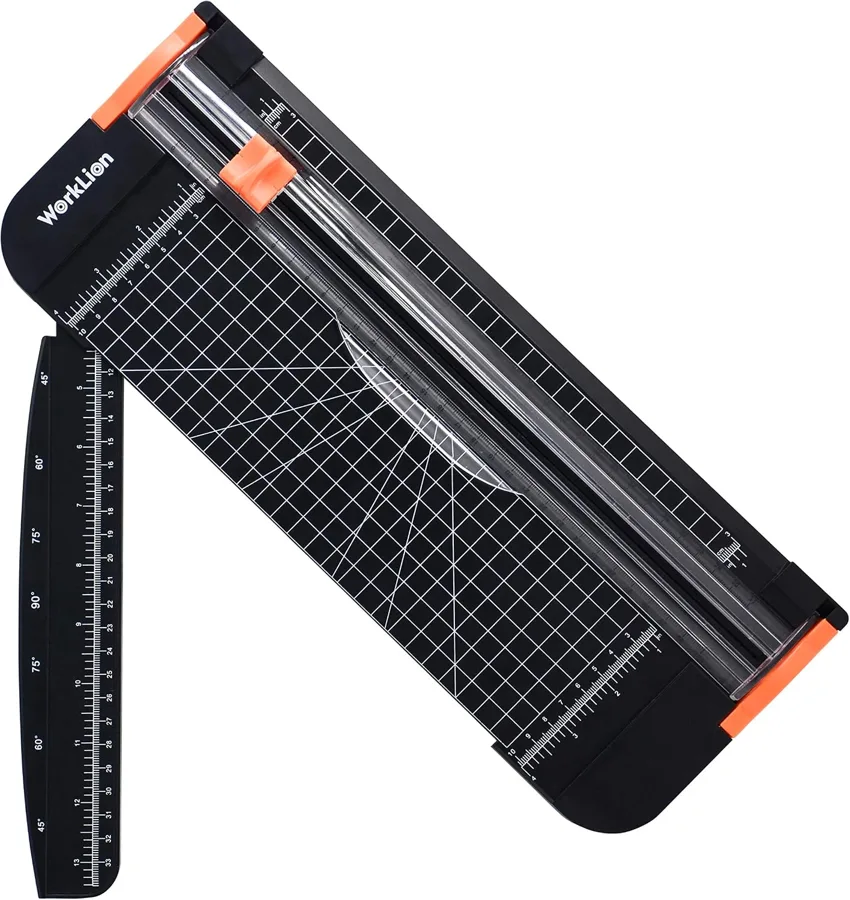
We Compared the Leading Paper Cutters. Here's Why TrueTrim is #1:
 Written by Benjamin Carter
The usual second attempt is a trimmer from the craft aisle. It is light, the base creeps on a smooth table and the blade arm has play in it, so one hand steadies the cutter while the other cuts. A rotary trimmer is the next stop. It handles a single photo well but drags through a stack, so fifty handouts turn into an evening.
That cycle of buying and giving up is why this category confuses people. Every 12 in (30.5 cm) guillotine promises clean cuts, and the titles read almost the same. The real differences sit in the clamp, the guard, the blade and the rated capacity, and they rarely make it into a headline.
So we set five paper cutters side by side and read what each one offers and what real buyers say about it. Some pair a lock with a guard rail, others cover the blade until you press, and rated sheet counts run from 10 to 16. Before recommending one, we compared them.
Here's what we found.
How We Compared Them
This was a paper comparison, not a workshop trial. We read published specs, materials, parts, size charts and real buyer feedback for five paper cutters, then scored each on four criteria: Cutting Accuracy, Safety Features, Build Durability and Sheet Capacity. Where a figure is a rating, we read it as a rating and leaned on buyer comments for the everyday picture.
Cutting Accuracy looked at grids, rulers, clamps and how each design holds the paper. Safety Features covered guards, locks and blade covers. Build Durability weighed base and blade materials, non-slip parts and what buyers said about wear. Sheet Capacity compared sheets per cut and the paper weight behind each figure.
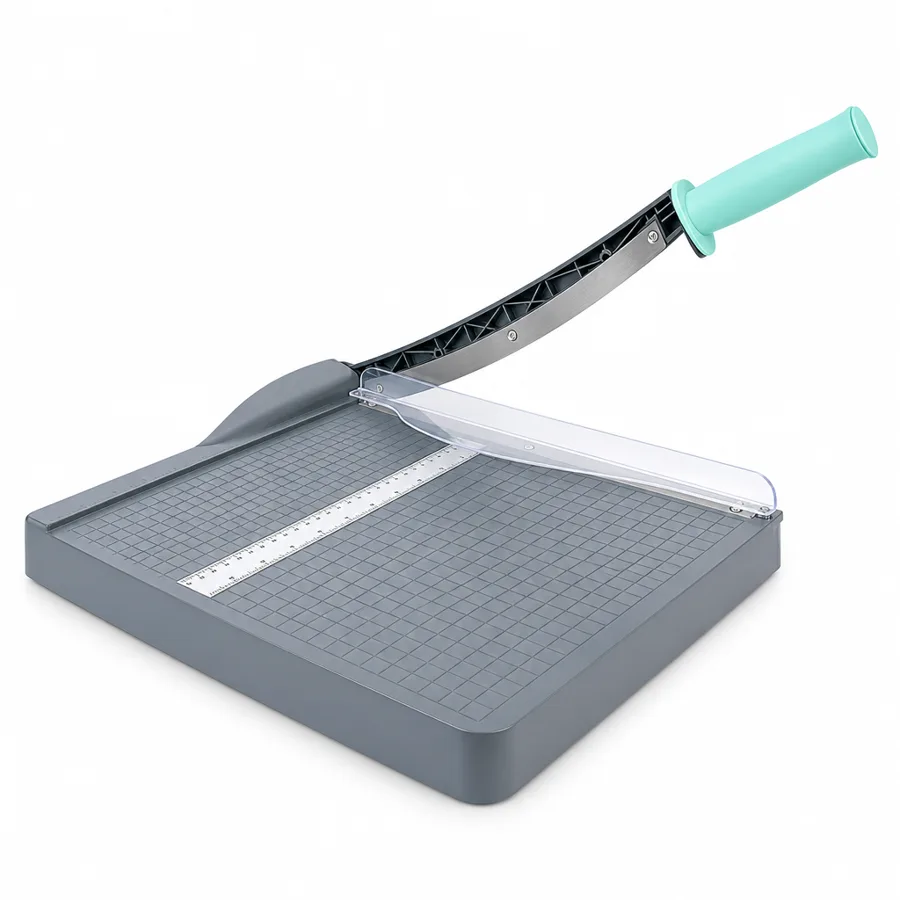
Our top pick led on every criterion. Its clear plastic press holds the paper and keeps your hand away from the blade, the printed grid and cm and inch ruler cover the whole bed, and the arm springs back to vertical after each cut. Its rated capacity is the highest of the five.
The secondary strengths add up. A safety lock buckle secures the arm in storage, and two blades, one fixed on the base and one on the arm, shear through the sheet. The ABS base measures 35 cm x 33.5 cm (13.7 x 13.1 in), and A4 fits in portrait and landscape across the 305 x 305 mm (12 x 12 in) cutting size.
One honest limitation: the handle ships separate and, once snapped on by hand, it cannot be removed. That is minor, because it takes no tools and one firm press, and you do it once. Like any sharp guillotine, it also asks for a straight-down swing, since sideways force can chip the blades.
The Results:
With a clear press, a printed grid, a locking blade arm and the highest rated capacity here, TrueTrim is the top pick for anyone who wants straight, steady trims.
Value
You stop re-cutting. No more eyeballing a line, nudging a sheet and hoping the scissors follow it. A clear press and a printed grid take over the guesswork, so you get fewer re-cuts when the paper stays held and lined up.
Doing nothing has a cost too. A towel under a sliding trimmer, a stack of cardstock lost to jagged edges, a flimsy cutter replaced when the handle gives up: those small losses repeat. A cutter that keeps paper still and parks its blade behind a lock is the one you stop thinking about.
The parts are easy to read. The blade is hardened 65Mn manganese steel, pre-sharpened, the base is ABS engineering plastic with a printed grid and ruler strip, and six non-slip pads sit underneath. Cut straight down, let the arm spring back, close the buckle, and it is ready for the next job.
Tidy edges, then back in the drawer
Picture the evening after: handouts trimmed and stacked, vacation prints with even borders, and the blade arm shut under its lock. The cutter slides into a drawer and the table is yours again, edges crisp.
Teachers prepping for the morning, scrapbookers making birthday cards, home-office freelancers trimming proposals, photo hobbyists and notebook makers squaring page edges all follow the same routine. The box says to keep it away from children, fire and high temperature.
Frequently Asked Questions
It is rated for up to 16 sheets of 70 g (18.6 lb bond) A4 paper per cut. For photos or heavier card, cut a few sheets at a time and swing straight down.
Yes, it cuts paper, photos, magazines and card. The clear press holds the paper steady and the grid helps you line up the edge. Use smaller stacks for photos and card to get the cleanest edges.
Once the arm has sprung back upright, close the safety lock buckle. It secures the blade arm whenever the cutter is not in use, so the edge stays put in the drawer.
Sideways force is the usual culprit, and it can chip the blades too. Square the sheet on the grid and ruler, let the clear press hold the stack, then swing straight down with steady pressure.
It has a hardened, pre-sharpened 65Mn manganese steel blade, with a fixed blade on the base and a moving blade on the arm. The facts we compared do not say whether the blade can be replaced, so check before you buy if that matters to you.
The base is ABS engineering plastic with six non-slip pads under it, and a straight-down swing with no sideways force protects the blades. We have no lifespan figure for it, so we do not promise one.
No tools. The handle ships separate and snaps onto the blade arm by hand with a firm press. Once it is on, it cannot be removed, so check the fit before you press.
The base measures 35 cm x 33.5 cm (13.7 x 13.1 in) and the handle is 12.6 cm (4.9 in), hand-measured within 1 to 2 cm (0.4 to 0.8 in). Measure the desk area and the drawer where you plan to keep it, and allow a little extra.
Purchase and Delivery Process
Open the store page for our top pick, TrueTrim, where you will find the details. When you are ready, confirm your order.
Your paper cutter comes with the handle detached, ready to snap on by hand with no tools. Check the fit, then press it home.
Square your first sheet on the grid, swing straight down, and lock the arm when you finish.
Where Can I Buy the TrueTrim?
Getting your own TrueTrim with a 50% discount is simple. Just follow these steps: