

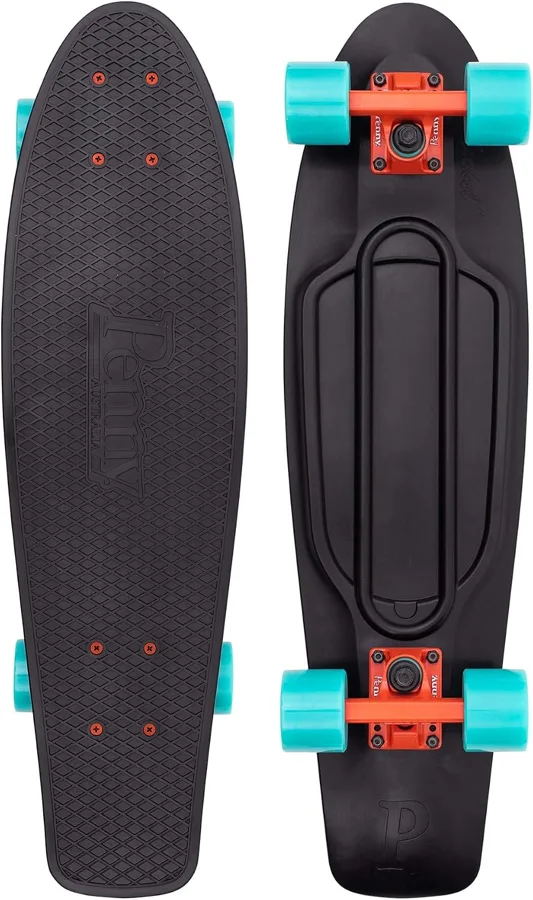
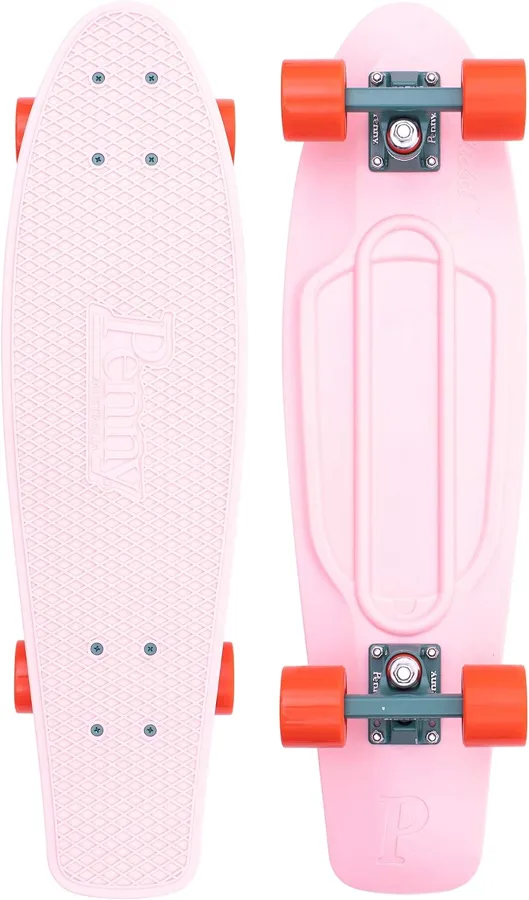
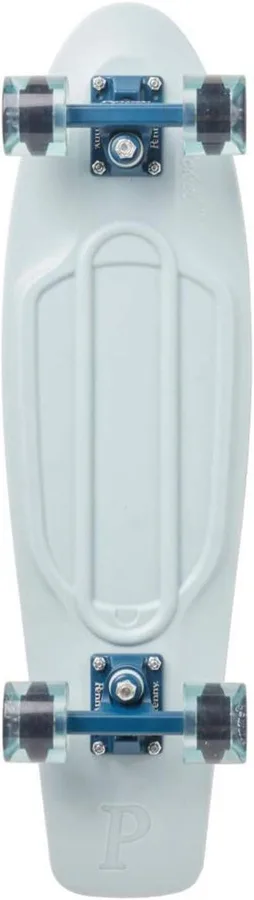
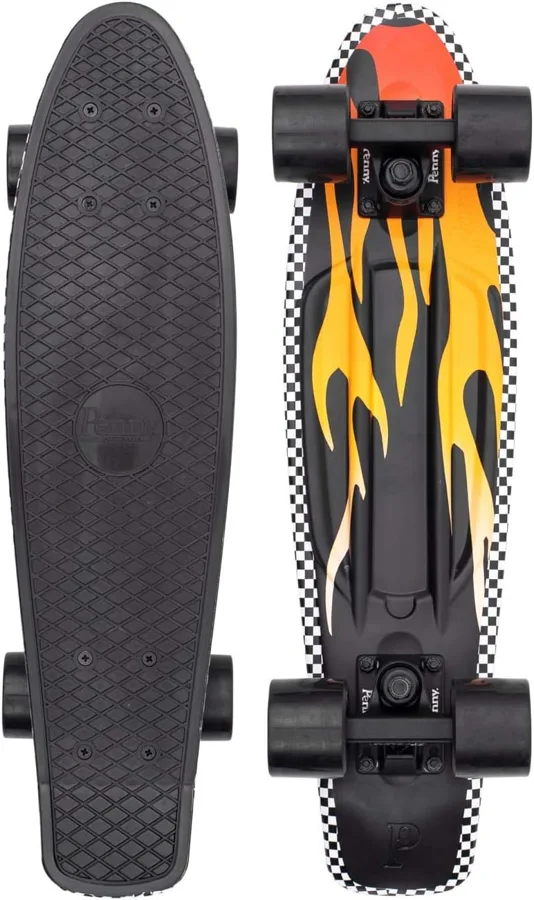
We Compared the Leading Penny Boards. Here's Why GlideGrin is #1:
 Written by Jessica Harmon
Most boards force a trade. A long, wide deck gives your feet room but becomes a bulky carry, while a short deck tucks under your arm and asks you to be sure of your stance. Cheap versions often cut corners on the parts too, and that is when walking starts to look easier.
What to look for instead is less obvious than a logo. You want a compact, lighter deck you can carry by hand, soft wheels that roll over rough pavement, and solid plastic you can trust under your weight. A quick shoe check settles the width question before you order.
So we lined up five penny board models side by side. Four carry the Penny Australia name, and one is a compact cruiser from another maker. We compared their specs, parts, sizes and buyer feedback to see which one solves the short-trip problem best.
Here's what we found.
How We Compared Them
Nobody rode these boards for this guide. We compared the five penny board models on paper, using published specs, materials, parts, size charts, design and real buyer feedback. Each was rated on four criteria: Portability and Weight, Deck Size and Room, Ride Smoothness and Casual Durability.
For portability we read weight and deck length, and for deck size we compared length and width. For ride smoothness we looked at wheel hardness, bearings, trucks and bushings. For durability we weighed deck material, rated load and what buyers praised or complained about. Carrying and rolling counted most, since those decide a short trip.
The comparison shows our top pick winning where short trips are decided. It pairs the softest wheels in this group, 60 mm (2.36 in) at 78A against 83A on the four Penny Australia boards, with a compact 56 cm (22.0 in) deck that weighs 1.8 kg (3.97 lb) and carries by hand. On rough sidewalks, the wheels give it the edge.
The secondary strengths add up. The 3.25 in (8.26 cm) aluminum trucks with high-rebound 85A PU bushings help it steer by leaning, ABEC-7 bearings keep it rolling, and the molded waffle top removes the need for grip tape. The deck is new PP plastic rated to 100 kg (220 lb), level with the highest rating in the group.
There is one honest limit. The deck is 15 cm (5.9 in) wide, so riders with big feet should measure their shoes first. The 69 cm (27 in) boards give more room but are a longer carry, and the Cactus Wanderlust at 1162 g (2.56 lb) weighs less than this model. For short hops on soft wheels, the narrower deck is a minor trade-off.
The Results:
GlideGrin is the #1 choice because it combines a compact 56 cm (22 in) deck, the softest wheels in the group and a 100 kg (220 lb) rating for short-trip riding.
Value
With the right board, you stop planning your day around the walk. No more leaving the board at home because it is too long to carry, no more arriving damp and late. You carry 1.8 kg (3.97 lb) of board by hand and ride the stretch that used to eat your time.
Doing nothing has a cost too. Every long hot walk is minutes you do not get back, and a full-size board left by the door is a board you never use. Keep making the trip on foot and the same sweaty mile keeps waiting for you.
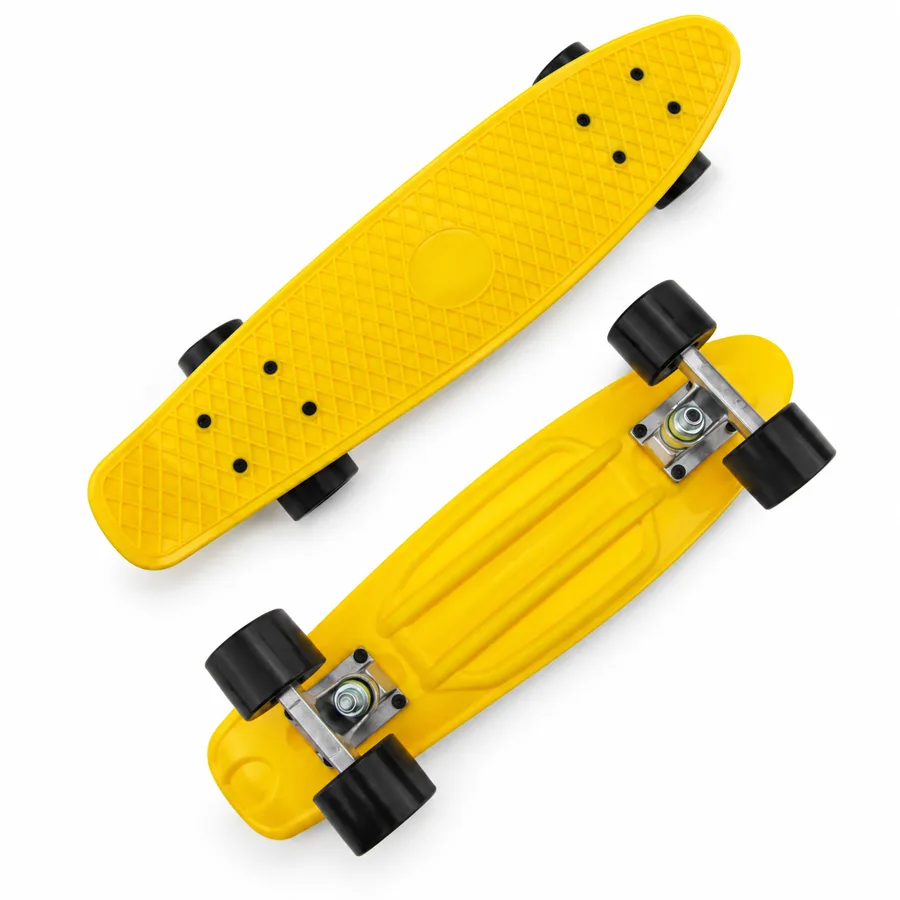
Here is what you get. It has a new PP plastic deck, aluminum trucks bolted on with four black bolts each, high-rebound 85A PU bushings and ABEC-7 bearings. Soft 78A wheels and a molded waffle top come on a board that arrives assembled. If you want short trips that feel good, this is the confident choice.
Arrive Rolling, Not Sweating
Picture the end of your day. You step off the train, set the board down, and push off along the cracked sidewalk. The soft wheels hum, you lean into the corner, and you roll past the walkers with a grin instead of a damp shirt.
The same board suits students crossing campus, office workers on the last stretch from the station, and adult beginners who find full-size boards intimidating. It is made for general use, not kids only, and its bright color pairs make it a fun gift idea for a teen who wants a board of their own.
Frequently Asked Questions
It is made for general use, not kids only. The deck is rated for riders up to 100 kg (220 lb), so it suits adult beginners and commuters. Check your shoe against the 15 cm (5.9 in) wide deck first.
It is rated for riders up to 100 kg (220 lb). Compare that with your own weight and leave yourself some margin.
There is one size, 56 cm (22 in) long and 15 cm (5.9 in) wide. Measure your shoe length and width and compare them with the deck. Riders with large feet should look at the wider 27 in (68.6 cm) Penny Australia decks.
Yes, it comes as a complete board with the trucks and wheels fitted, in a bubble bag. A skate tool and a skateboard bag are extras that are not in the box.
No. ABEC-7 bearings, 85A bushings and 78A wheels come fitted, so there is nothing to add before the first ride. The 60 mm (2.36 in) PU wheels are soft and made for rolling over pavement.
A short, narrow deck takes some getting used to. Start on smooth, flat paths and let your stance settle before you head for busier sidewalks. The deck is 15 cm (5.9 in) wide, so a shoe check helps too.
That depends on how you ride, so we point you to the parts. The deck is new (virgin) PP plastic, the trucks are aluminum, and the rating is 100 kg (220 lb). It is built for short trips on sidewalks and paths.
This is a short-distance cruiser for campus paths, sidewalks and quick trips. It is not built as a trick or downhill board, so pick it for easy rides between places.
Purchase and Delivery Process
Ordering takes a few minutes. Open the store page for our top pick and choose your color: yellow deck with black wheels, orange deck with purple wheels, or red deck with blue wheels.
The store page shows the current offer, the options and the delivery details. Check them there, then confirm your order. Your penny board arrives as a complete, assembled cruiser in a bubble bag.
Where Can I Buy the GlideGrin?
Getting your own GlideGrin with a 50% discount is simple. Just follow these steps: