

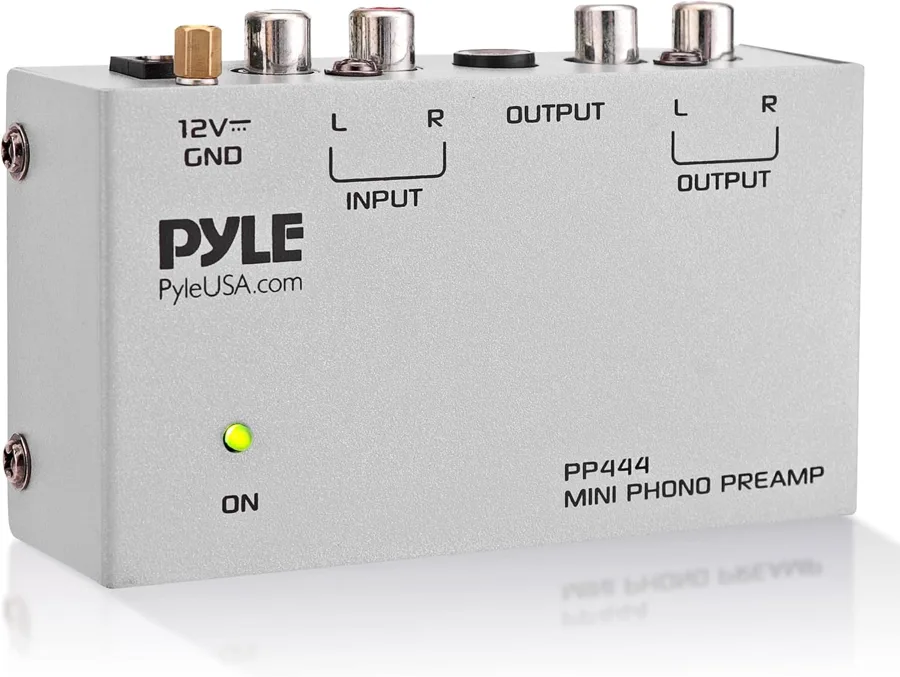
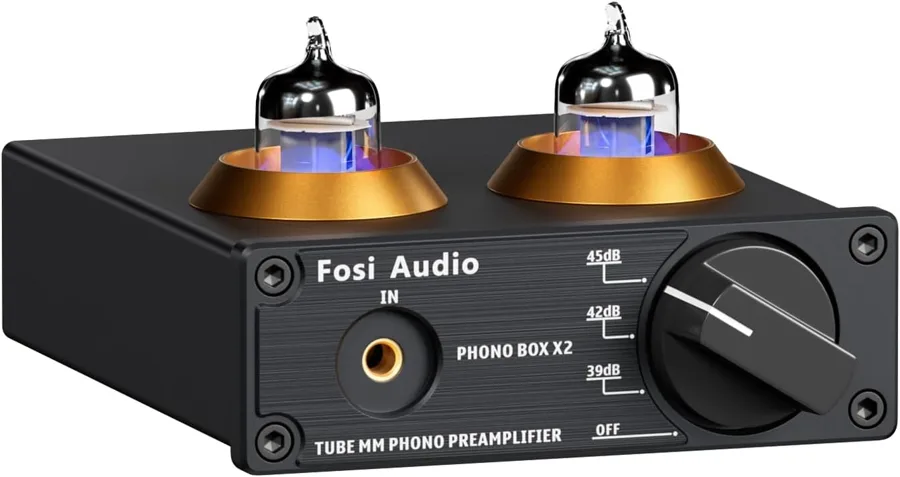
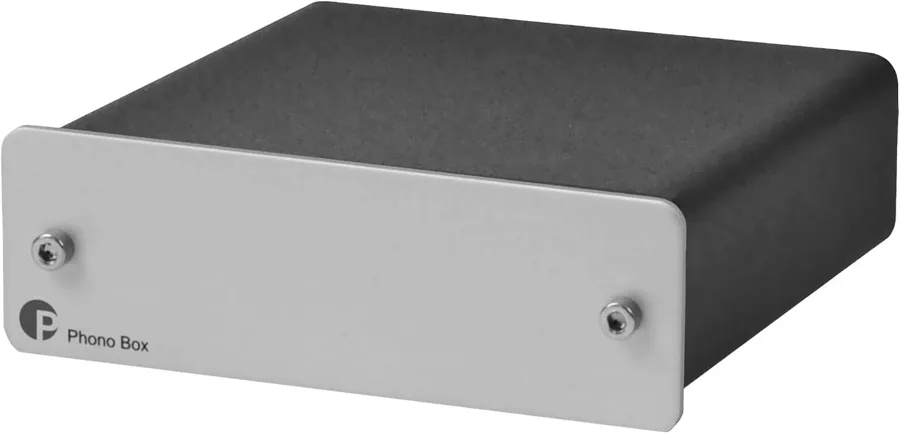
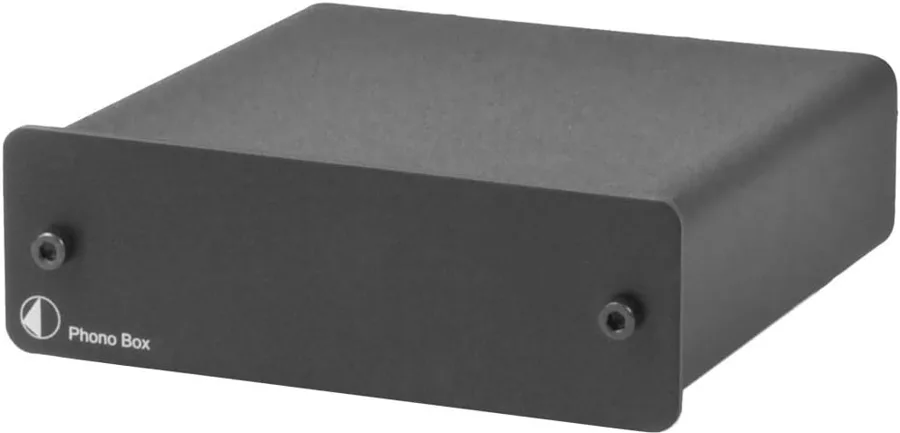
We Compared the Leading Phono Preamps. Here's Why GrooveBridge is #1:
 Written by Benjamin Carter
The reason those fixes fail is that a turntable's signal needs its own stage before it reaches a line input like AUX. No cable swap changes that. The job calls for a small box that does that one thing and stays out of the way.
What should you look for? A screw for the ground wire, outputs that match your amp or mixer, a level you can set by hand, and a body slim enough to tuck behind the deck. For a returning vinyl fan, fewer parts to fuss over matters more than a long feature list.
The trouble is that the category is crowded and the listings overlap. Some boxes add tubes and gain switches, others add cartridge settings, and a few are plain plastic. So we lined up five of them and judged each by the same four yardsticks before naming a winner.
Here's what we found.
How We Compared Them
We compared the five models on four criteria: Value for Money, Setup and Size, Grounding and Hum, and Features and Controls. For each one we went through the published specifications, materials, dimensions, connectors and power details, and we looked at what comes in the box.
We also read the buyer feedback available for the other brands' models, noting what owners praise and what they complain about. Everything was judged on paper, side by side, so no model was favored because of its brand name. Ratings in each card reflect how well a model fits a typical turntable owner reconnecting records to a modern system.
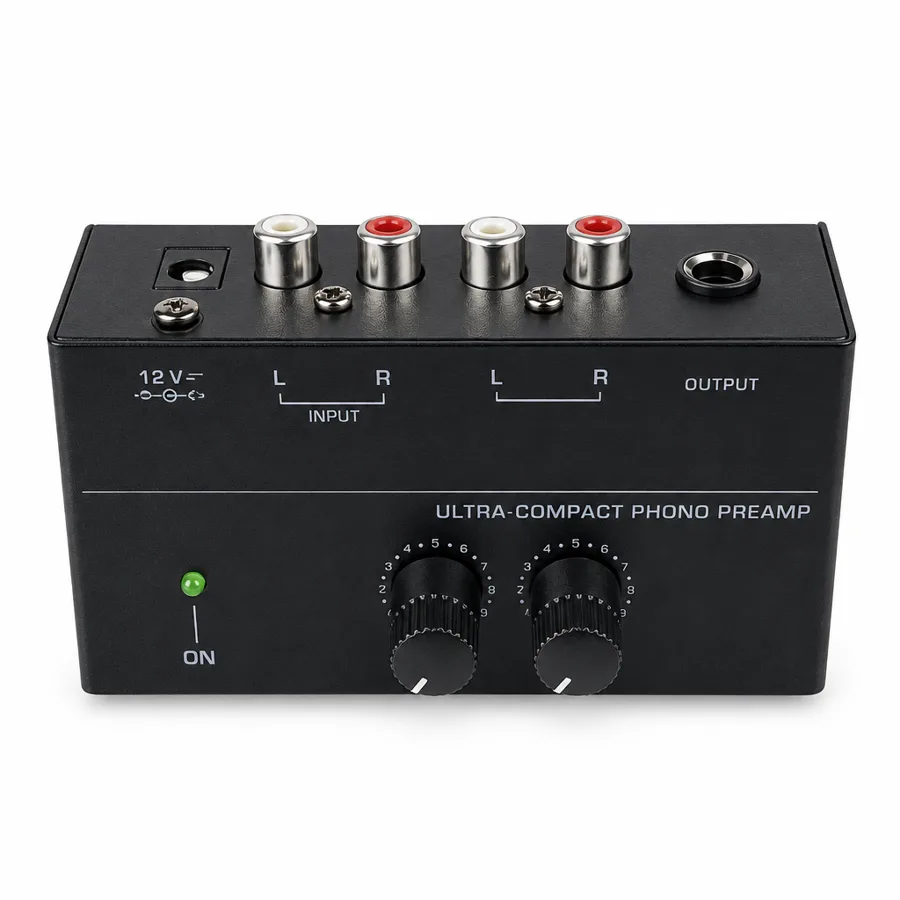
The comparison put GrooveBridge first because it combines the smallest footprint with the most useful connections. At 10.5 x 5.7 x 3.1 cm (4.13 x 2.24 x 1.22 in) it is the most compact box of the five, yet it has a ground screw terminal, RCA outputs and a 6.35 mm (1/4 in) OUTPUT jack.
Secondary strengths add up. Two knobs set the volume for each output, a green ON light confirms power, and the included adapter accepts 110V to 240V mains. The others offer a plastic body, tubes, or a cartridge switch, but none pairs small size with two output routes.
The honest limitation is that RCA cables are not shown in the box, so have a pair ready before you connect. It is a minor point, because the rest of the package keeps the hookup short and clear.
The Results:
With the smallest body, a ground screw, two output routes and hand-set levels, GrooveBridge is the top pick for getting vinyl back onto modern gear.
Value
Think about what you stop doing. No more nudging the receiver volume to the end of the dial, no more squinting at the back panel for a phono jack that is not there, and no more records sitting unplayed in crates. This model gives you a defined path: turntable in, receiver or mixer out.
Doing nothing has its own cost. A loose ground wire left to dangle, a stack of adapters from the drawer, a makeshift fix you replace the moment it irritates you. Each workaround takes a little time every listening session, and the music never quite arrives.
Here is what is in the unit: a black metal-look housing, a screw terminal for the ground wire, two rotary knobs scaled 0 to 10, and a 110V to 240V adapter. It is a plain package aimed at one job, your records through your receiver.
Your Records Back in the Room
Picture a quiet evening. The turntable sits on its stand, the preamp is out of sight behind it, and the green light glows. You lower the needle, turn the knob for the RCA output to where it feels right, and settle back while the first track fills the room.
The same box suits a college student wiring a deck to desk speakers, a parent pulling a childhood collection out of the attic, a home office listener with a new receiver, or a gift giver who wants a simple hookup. It tucks into small spaces, which makes it easy to add to a dorm, an apartment or a family room.
Frequently Asked Questions
Yes, if your turntable has an RCA output and no built-in preamp, or its switch is set to PHONO. It is made for vinyl turntables. Check that your cartridge type fits, because the specifications do not state MM or MC support.
It fastens to the ground screw terminal on the preamp. Tighten it snugly before you turn the volume up. It is the first thing to check if you hear a buzz.
Start with the ground wire and make sure it is snug on the screw terminal. Then check that the RCA cables are fully seated. If the buzz persists, check the turntable's own ground and its cable.
Use a line-level input such as AUX, not a phono input, because this unit already does the phono job. It can also send sound to a mixer through the RCA outputs or the 6.35 mm (1/4 in) jack.
You get the GrooveBridge preamp, a power adapter with a US plug and DC cable, and the retail color box. RCA cables are not shown in the box, so keep a pair on hand for your connections.
Simple boxes like this one cover most living-room setups where a turntable needs to reach a receiver with no phono input. Pricier units suit owners with an MC cartridge or those who like to tinker with gain and tubes.
If the switch is set to LINE, the turntable has its own preamp and can go straight to AUX. Set to PHONO, it needs an external stage like this one between it and your amp.
We compared published specifications and buyer feedback, so we cannot put a figure on lifespan and make no promise. What you can see is a plain unit: a housing, a ground screw, two knobs and a wall adapter.
Purchase and Delivery Process
Ordering is straightforward. Open the store page for our top pick, choose the US plug adapter, and add it to your cart.
Have a pair of RCA cables ready, and think about where the ground wire will fasten.
Setup is four short steps: turntable into the RCA input, ground wire to the screw, adapter into the DC jack, outputs to your amp or mixer.
Where Can I Buy the GrooveBridge?
Getting your own GrooveBridge with a 50% discount is simple. Just follow these steps: