

We Compared the Leading Digital Psychrometers. Here's Why DewSense is #1:
 Written by Emma Collins
Many buyers try the obvious fixes next. They buy a second cheap meter to cross-check the first, and the two disagree. They keep the sling for the important jobs, which brings back the wet wick, the chart and the ladder. Neither habit gives you a number you can stand behind on site.
What works better is a digital psychrometer that shows wet bulb and dew point beside humidity and temperature. Look for a sensor that is covered when the work is done, because dust and knocks in a truck are what slowly spoil a bare tip. That one feature separates a daily tool from a drawer filler.
Then look at what surrounds the sensor: a probe input for surfaces and ducts, a hold button to freeze the number, stated tolerances you can check, and a body slim enough for a tool pouch. A meter that gets these four things right earns its place in the bag. The next question is which of the five does.
Here's what we found.
How We Compared Them
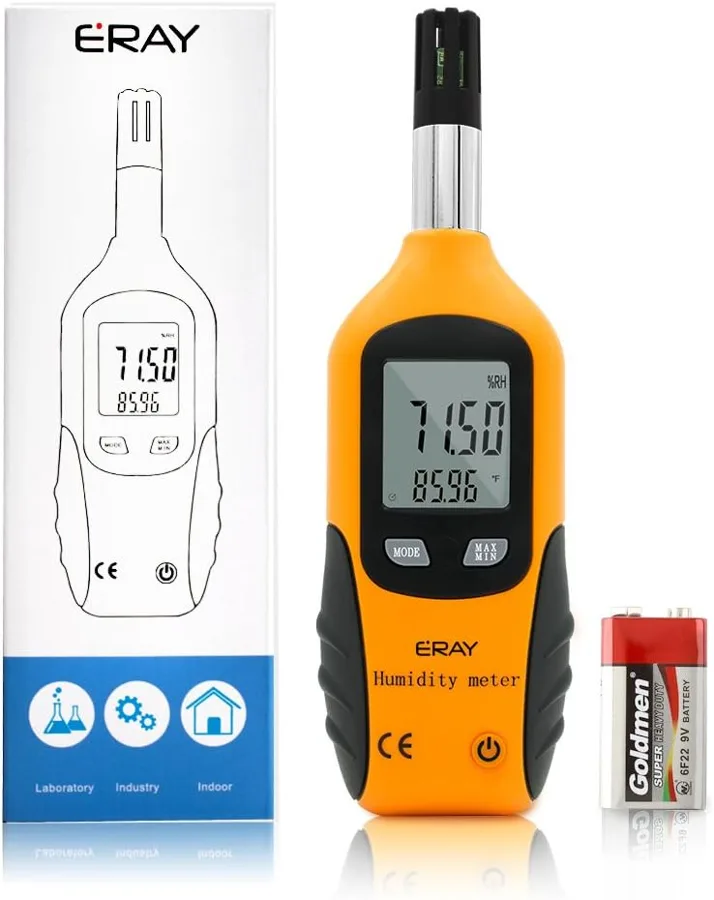
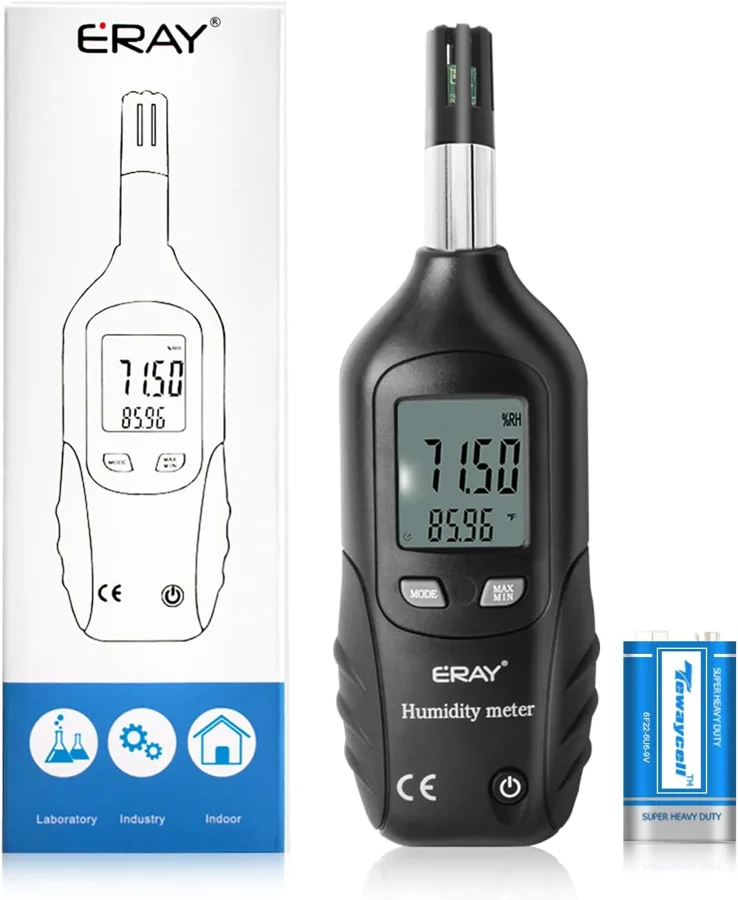
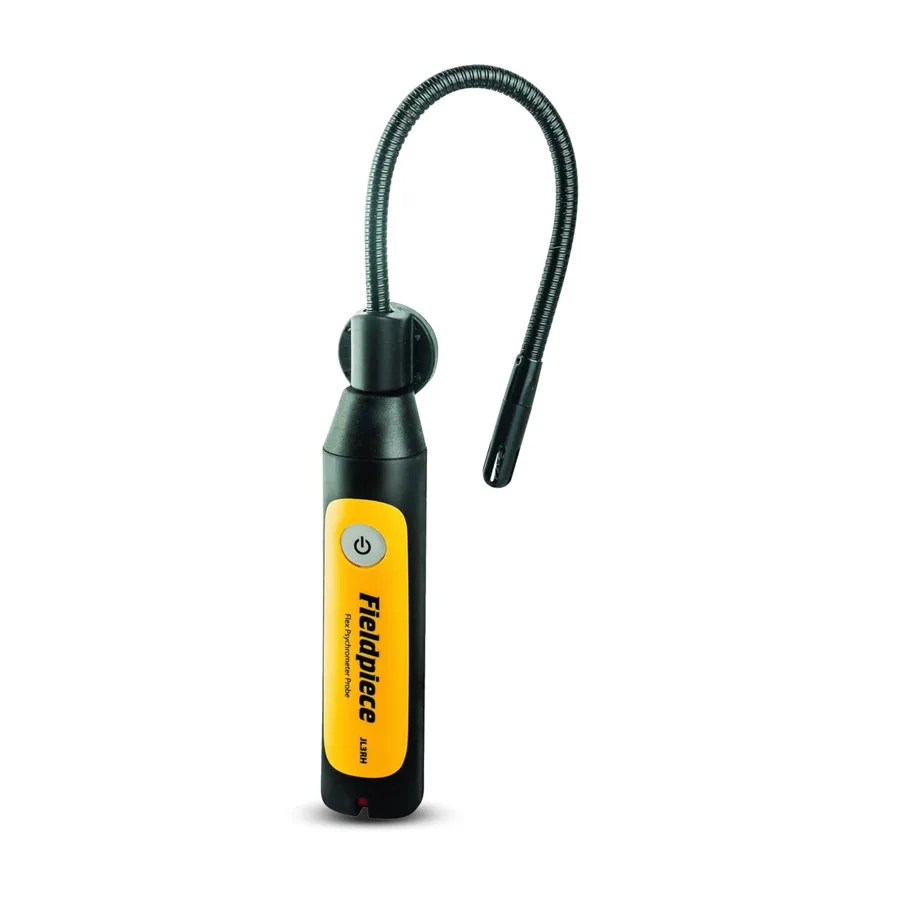
We ranked five meters on four criteria: Sensor Protection, Wet Bulb and Dew Point, Accuracy and Calibration, and Build and Readability. We compared published specifications, materials and parts, body dimensions and real buyer feedback. Each psychrometer was judged on paper against the same questions.
For each criterion we asked one plain question. Does the sensor stay covered in a bag? Are wet bulb and dew point on screen without a chart? Ratings reflect how well the facts answer each question, so a clear weak spot pulls a score down however good the rest looks.
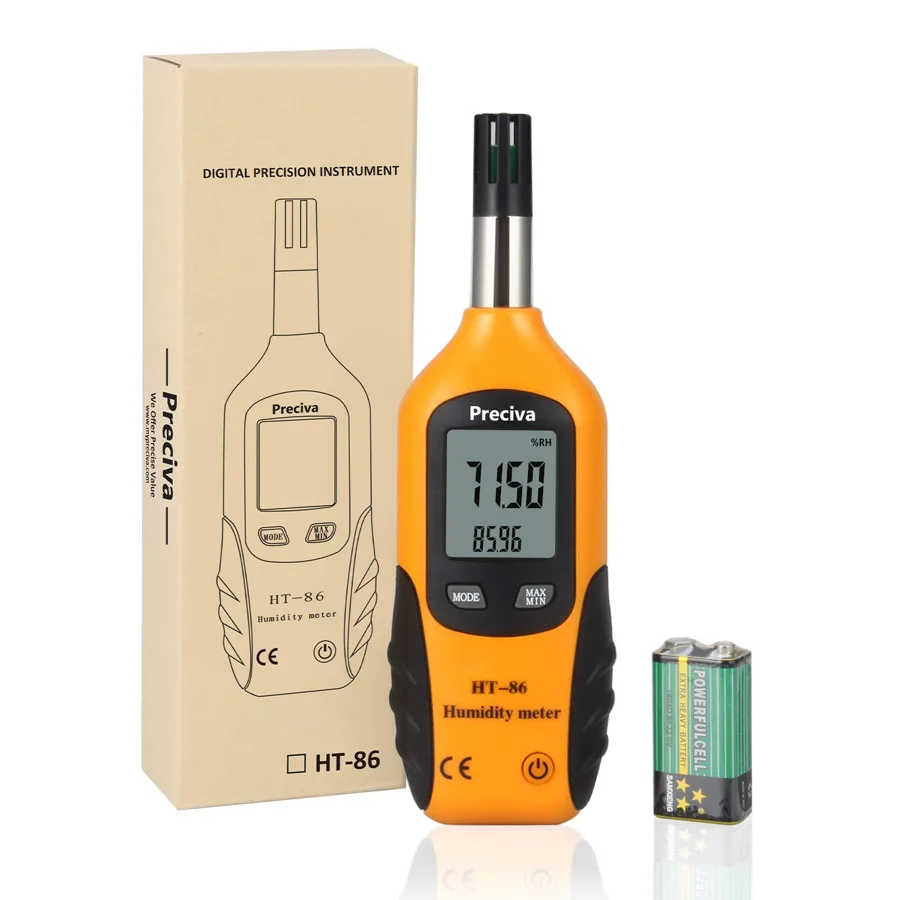
Our top pick ranked first on all four criteria: 96 for Sensor Protection, 95 for Wet Bulb and Dew Point, 94 for Accuracy and Calibration and 93 for Build and Readability. The gap is widest on sensor protection, where its rotating cap is the only cover in the group. Preciva, the nearest rival, scored between 83 and 88.
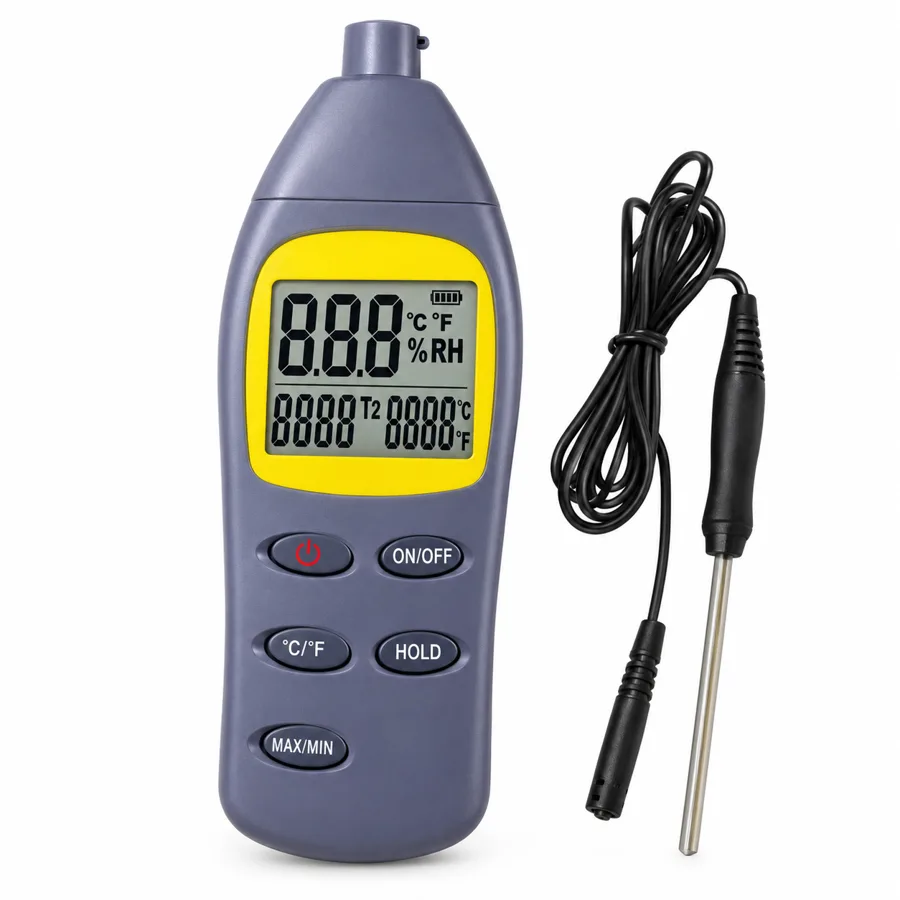
The secondary strengths add up. The external probe reads from -20 to 70 °C (-4 to 158 °F) while the meter calculates the T1-T2 difference, and tenth-degree readings let you compare job to job. HOLD and MIN/MAX are built in, and optional 33% and 75% RH salt jars let you check humidity yourself. Two AAA batteries are in the box.
The honest limitation is the 60-second response time, along with a looser ±5 %RH outside the 10 to 90 %RH band. It is minor. Nobody takes a careful wet bulb reading in five seconds, and HOLD lets you freeze the number once it settles.
The Results:
With a covered sensor, wet bulb and dew point on one screen and a second probe in the kit, DewSense is our top pick for anyone who reads the air on the job.
Value
Stop copying numbers onto your hand and stop carrying a second meter to cross-check the first. Everything you need shows on one LCD, HOLD freezes the figure, MIN/MAX keeps the extremes, and a °C/°F switch matches your paperwork. The routine gets shorter and calmer.
Doing nothing has its own bill. A doubtful number means a second visit, an awkward call to a customer, or a replacement for the meter that took too many knocks. Makeshift fixes keep costing you minutes on every job.
Build confidence comes from the details: a capacitive humidity sensor, a low battery indicator, and an auto power off after 5 minutes that you can disable. It stores from -20 to 50 °C (-4 to 122 °F) and operates from 0 to 50 °C (32 to 122 °F). This is a tool made to be picked up again tomorrow.
What Your Next Job Looks Like
You step into the attic, open the cap, and let the meter settle while you set up. A minute later, wet bulb and dew point are on the screen and HOLD keeps them there. No ladder gymnastics, no chart in your teeth, and the cap closes before it goes back in your bag.
The same routine helps others: restoration crews checking a drying job, painting contractors comparing surface and dew point before a coat, greenhouse managers after the misters run, and IAQ consultants answering a muggy-office complaint. A new apprentice gets a screen that reads plainly.
Frequently Asked Questions
Optional 33% and 75% RH calibration salt jars are offered as add-ons, so you can check humidity against a known reference yourself. You don't need them to start measuring.
Response time is 60 seconds, so give the meter a minute in the air you're checking. Then read the screen and press HOLD to freeze the number.
It reads 0 to 100 %RH and -20 to 50 °C (-4 to 122 °F). Temperature is ±0.6 °C (±1.1 °F), humidity is ±3 %RH at 25 °C from 10 to 90 %RH, and ±5 %RH outside that band. Salt jars let you check it.
Turn the rotating cap to CLOSE after each reading and it covers the sensor while the meter rides in your bag or truck. Open it again when you're ready to measure.
Yes, wherever the probe reaches. Plug it in and it reads a second temperature from -20 to 70 °C (-4 to 158 °F) on a 116 cm (45.7 in) cable, and the meter shows the T1-T2 difference with your air reading.
Dew point is calculated from the humidity and temperature readings, so the stated ±3 %RH and ±0.6 °C (±1.1 °F) tolerances apply. You can verify humidity yourself with the optional 33% and 75% RH salt jars.
The AZ8716 box holds the meter, the external probe, 2 AAA batteries, the manual and a color box. For carrying, the rotating cap covers the sensor, and your tool bag or pouch does the rest.
It gives you a rotating sensor cap, stated tolerances, an external probe and optional salt jars to check humidity. That is more to work with than a basic meter that shows one number alone.
Purchase and Delivery Process
Ordering is quick. Open the store page for our top pick, choose your model from the options, and add it to your cart. The features described in this guide apply to the AZ8716 option, with its external probe, dew point and wet bulb.
The AZ8736 and AZ8746 options use a K-type thermocouple instead, so pick the one that matches your work. Then confirm your order at checkout.
With the AZ8716, two AAA batteries are in the box, so you are ready for your first reading once it arrives.
Where Can I Buy the DewSense?
Getting your own DewSense with a 50% discount is simple. Just follow these steps: