

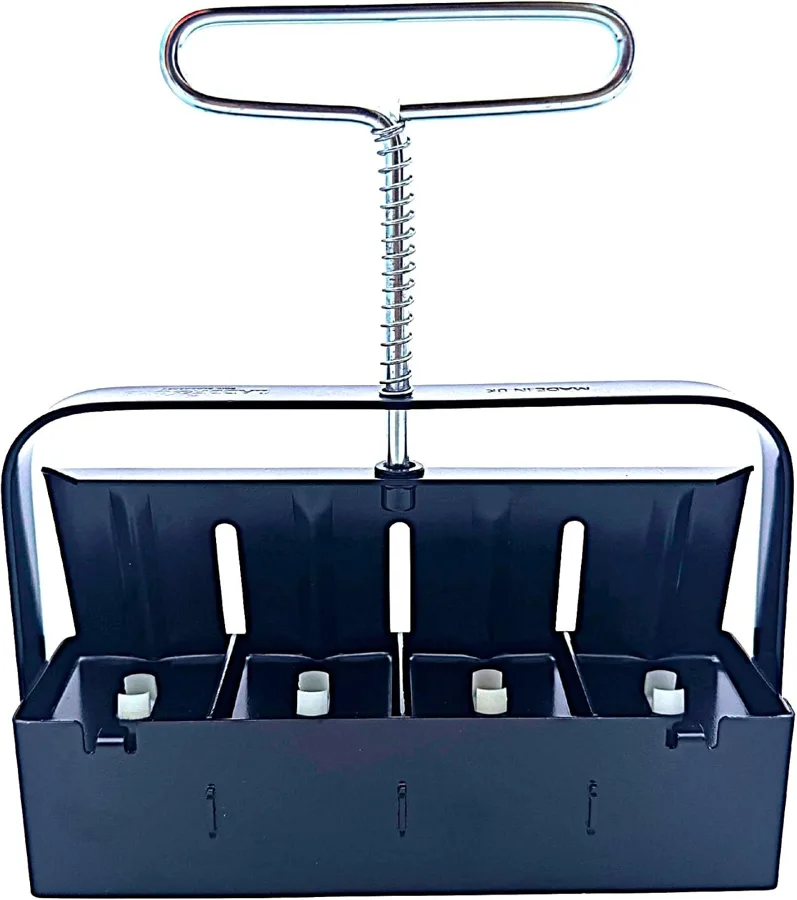
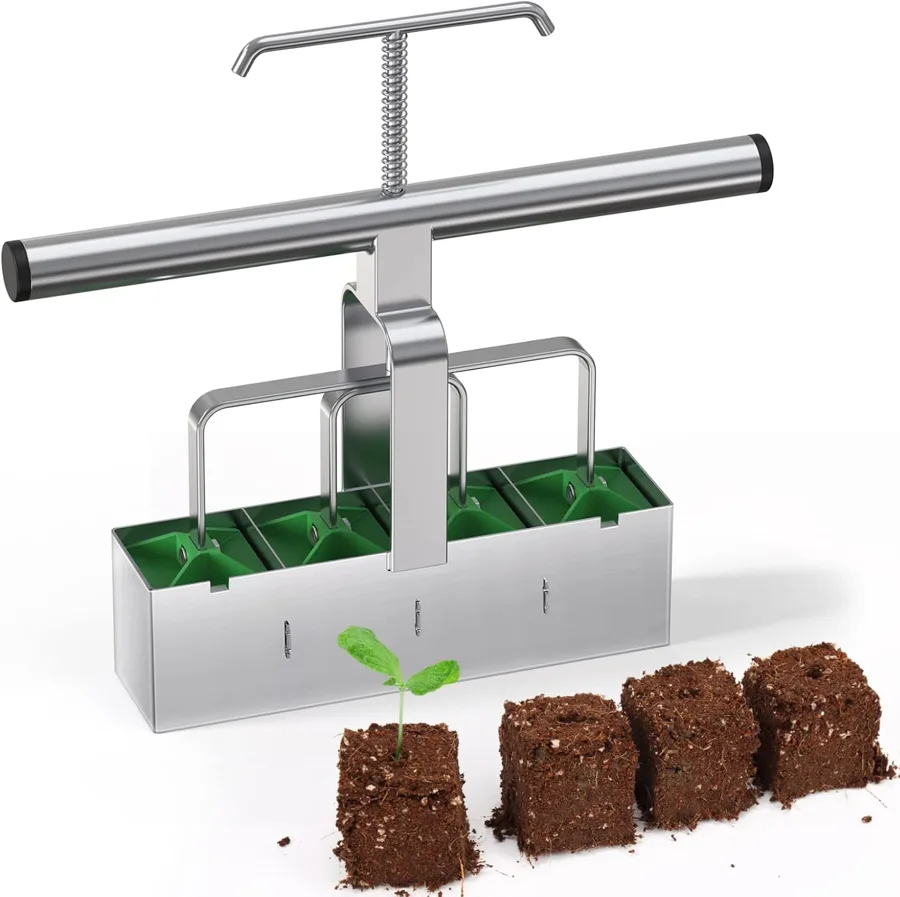
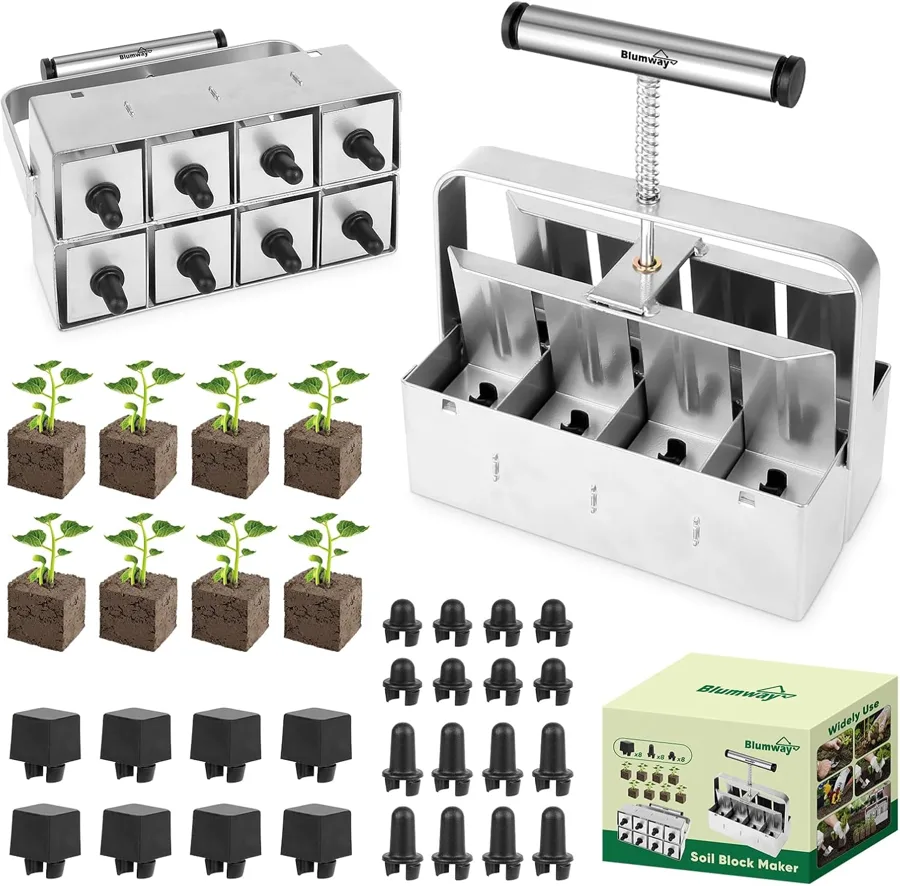
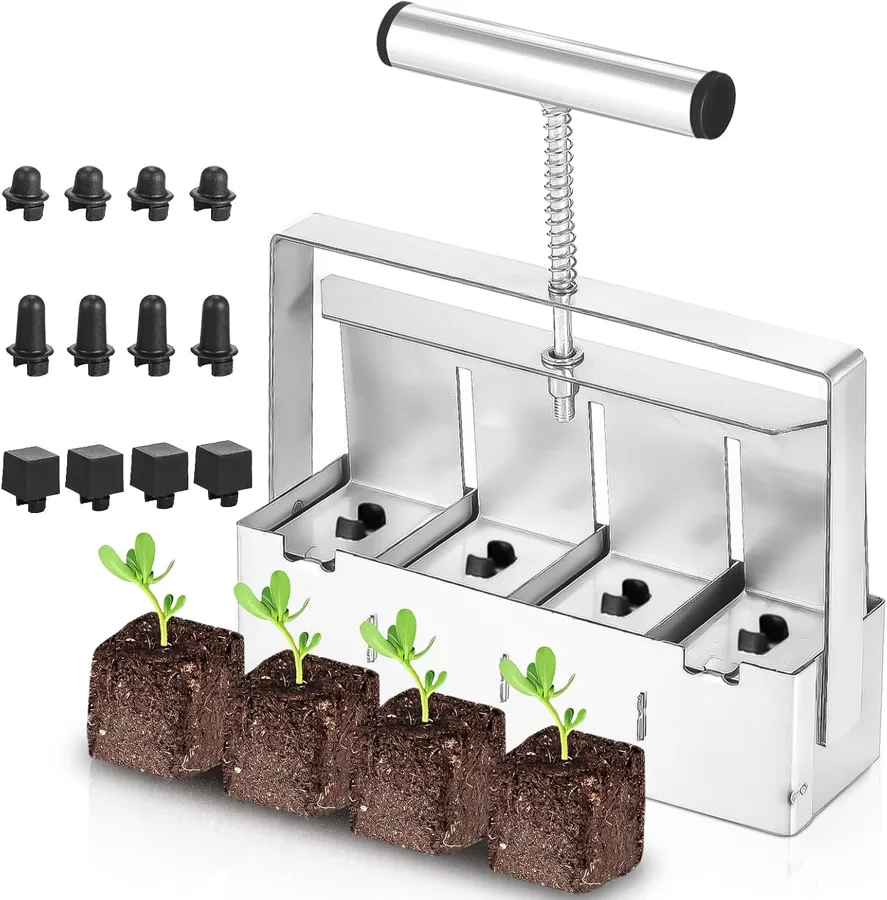
We Compared the Leading Soil Blockers. Here's Why Rootsquare is #1:
 Written by Jake Thornton
Once you drop trays and pots, the tool becomes the container. A block has no wall to hold it, so the blocker has to press firm, even cubes and let go of them cleanly. A tool that flexes or sticks shows up immediately on your tray.
It is tempting to reach for the cheapest tool on the shelf. Many soil blockers press only four blocks, and some leave pins loose, so you fit them before each round and hope none go missing. Filling a tray then turns into an evening of small repeats.
What to look for instead is a short list: more cells per press, a steel body that holds its shape, seed holes that arrive built in, and a release that lets the whole set go at once. Weight matters too, because a firm press and a light hand pull in different directions. Here is how the five contenders sort out against that list.
Here's what we found.
How We Compared Them
We compared five hand-operated soil blockers on four criteria: Blocks Per Press, Build Durability, Seed Hole Pins and Clean Block Release. Each was scored from its published specs, materials, parts list, size data and design, then set against real buyer feedback where it exists.
Nobody ran a bench trial, and we do not pretend otherwise. This is a paper comparison: what the steel is, how many cells and pins each tool has, how the release works, how heavy it is, and what owners praise or complain about. The percentage bars on each card reward what a feature does for you, not how long its spec list is.
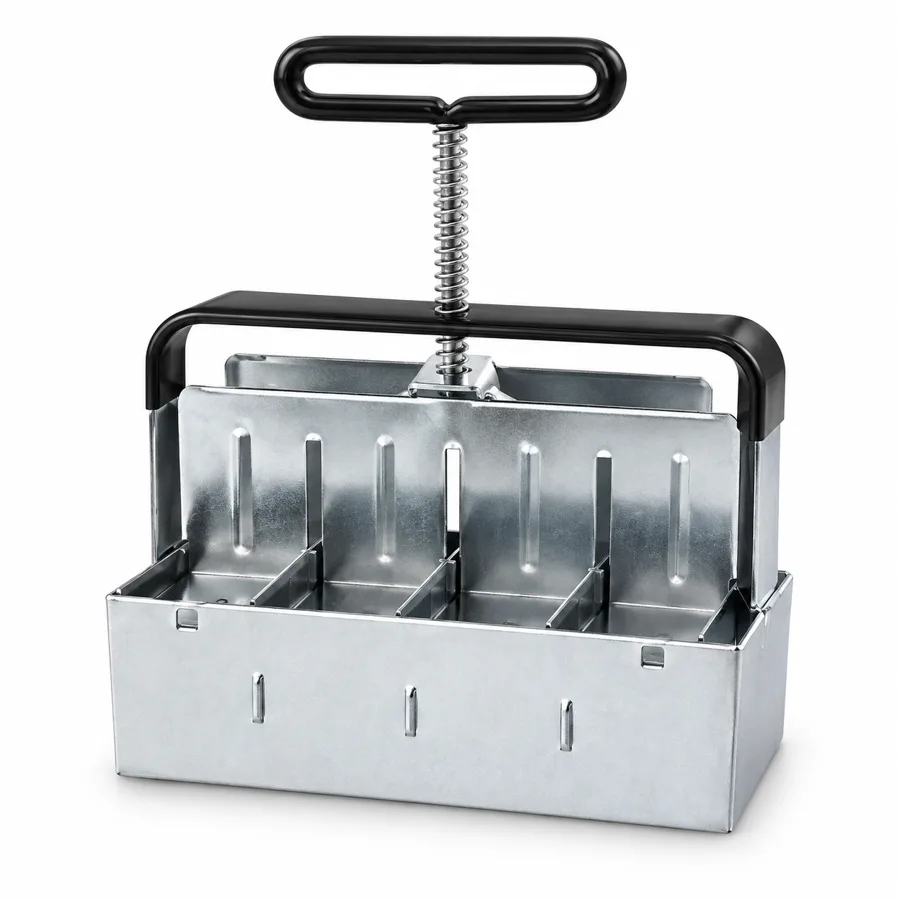
Our top pick won because it leads on the criteria buyers weigh first. It scored highest on Blocks Per Press and Clean Block Release, and it was the only one of the five to pair eight cells with seed hole pins already built into the body.
The secondary strengths are practical. One reusable galvanized steel tool replaces plastic cell trays and pots, and the box adds the spring T-handle, an English manual and a color gift box. On Build Durability the Ladbrooke came close, which says a lot about the English original.
One honest limitation: the seed hole shape comes with the built-in pins and cannot be swapped, where the BlumWay offers three pin shapes. For most starts in a 5 cm (2 in) block that is a minor trade, and it leaves you with nothing to fit or lose.
The Results:
With eight blocks per press, built-in seed hole pins and a one-push release, Rootsquare is our top pick for anyone who wants to start seeds without plastic trays.
Value
Picture a spring where you stop buying and storing plastic trays. You mix, press, level and push, and a tray of seed-holed cubes is ready in far fewer rounds. What you use is a reusable galvanized steel tool that replaces plastic trays and pots each spring.
Doing nothing has a cost too. Another year of trays to replace, roots wound tight in their cells, and a cheap blocker that leaves crumbs on the tray. Each is a small drag on your spring, and it returns every season.
Ownership feels solid because the parts are simple. The body is galvanized steel, the T-handle rides on a spring shaft, and the handle is described as having anti-slip cushioning and an ergonomic shape. There are no loose pins to track between seasons. Start your seeds with a tool that does the work.
Spring Starts Without the Plastic Pile
Picture late February: a tray of even, seed-holed cubes on the potting bench, the grow lights humming, and not a cracked plastic cell in sight. When planting day comes, you lift a block and set it in the ground with its roots left undisturbed.
Beyond the home vegetable bed, it suits small greenhouse growers, nursery work and flower beds. The color gift box and English manual also make it an easy present for a gardener tired of plastic pots, and families can press blocks together as a weekend project.
Frequently Asked Questions
Almost every first batch is practice. Aim for a wet, sticky mix that holds when squeezed with little water, press firmly, level the bottom, then push the handle. Too dry or loosely packed is the usual cause, and your first 20 blocks teach you the feel.
Plain potting soil often lacks the fiber that binds a block. Many growers blend compost, topsoil and vermiculite and wet it to a brownie batter consistency. Try a small batch first and squeeze it to check it holds.
Yes. It makes seed-holed blocks of about 5 cm (2 in) for seed starting and transplanting in a garden, nursery or greenhouse, which suits starts like tomatoes, peppers and lettuce. It is meant for seed starting at that size.
Open-sided blocks dry out faster than plastic cells, so check your tray every day, especially under lights or heat. Set the blocks on an open tray so air reaches the sides and water from the bottom, because pouring from above can erode them.
Roots air-prune at the open edges instead of circling, so seedlings can stay in a 5 cm (2 in) block longer than in a plastic cell. Plant out or move up once roots fill the cube and the plant outgrows it. Your seed packet and the look of the roots are the best guide.
The body is galvanized steel, not stainless. Wipe off wet soil after each session and store it dry.
At 1.61 kg (3.55 lb), the steel body gives a firm press but can tire the hand over a long session. If you prefer a lighter tool, the Soligt at 0.95 kg (2.1 lb) or the Ladbrooke at 680 g (1.5 lb) may suit you better. Take breaks between trays if you press for a long time.
Plastic walls make roots circle, and pulling a seedling out can damage them. Blocks air-prune roots at the edge and move with less root damage. A reusable steel tool also lets you skip buying pots and trays.
Purchase and Delivery Process
Select the order button to go to our top pick. Check the details, add it to your cart and confirm your order.
The box includes the 8-cell body with steel-ball pins, the T-handle with spring, an English manual and a color gift box.
Where Can I Buy the Rootsquare?
Getting your own Rootsquare with a 50% discount is simple. Just follow these steps: