

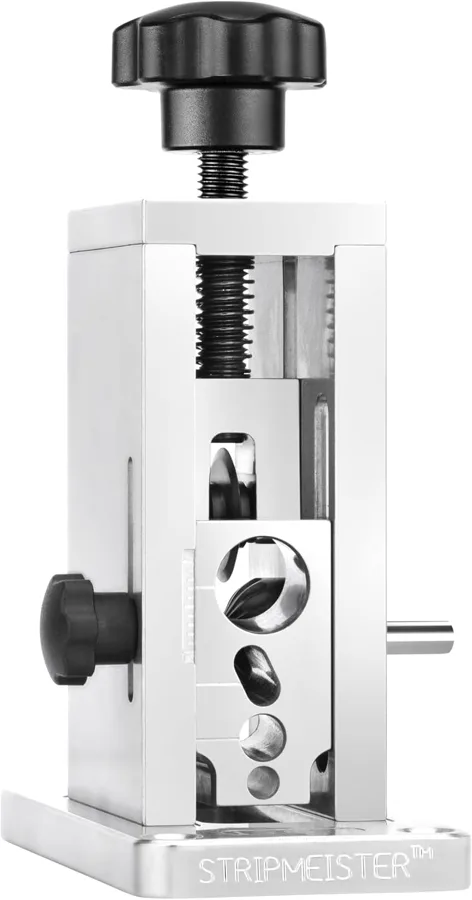
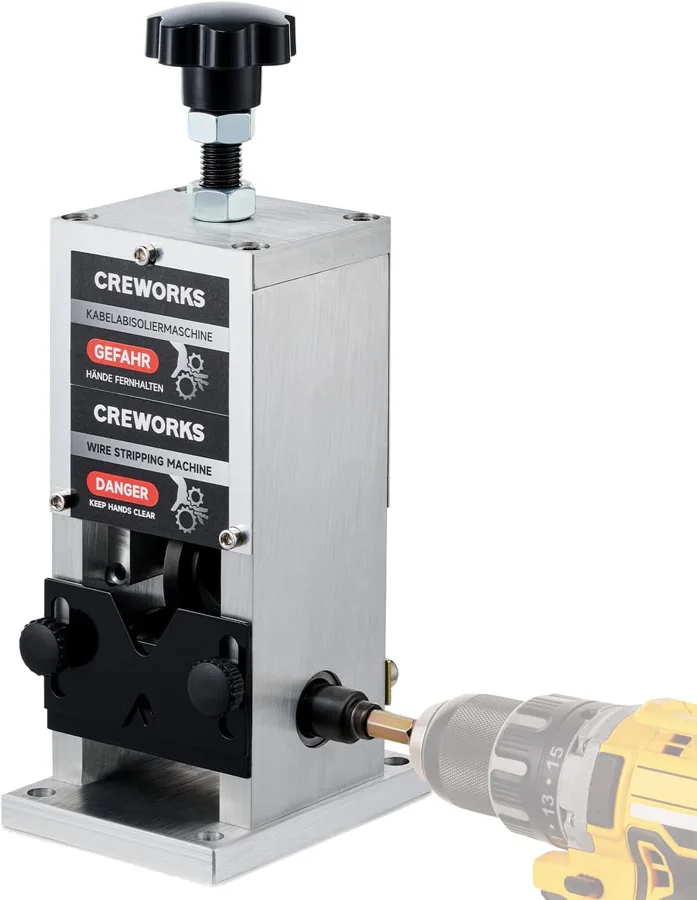
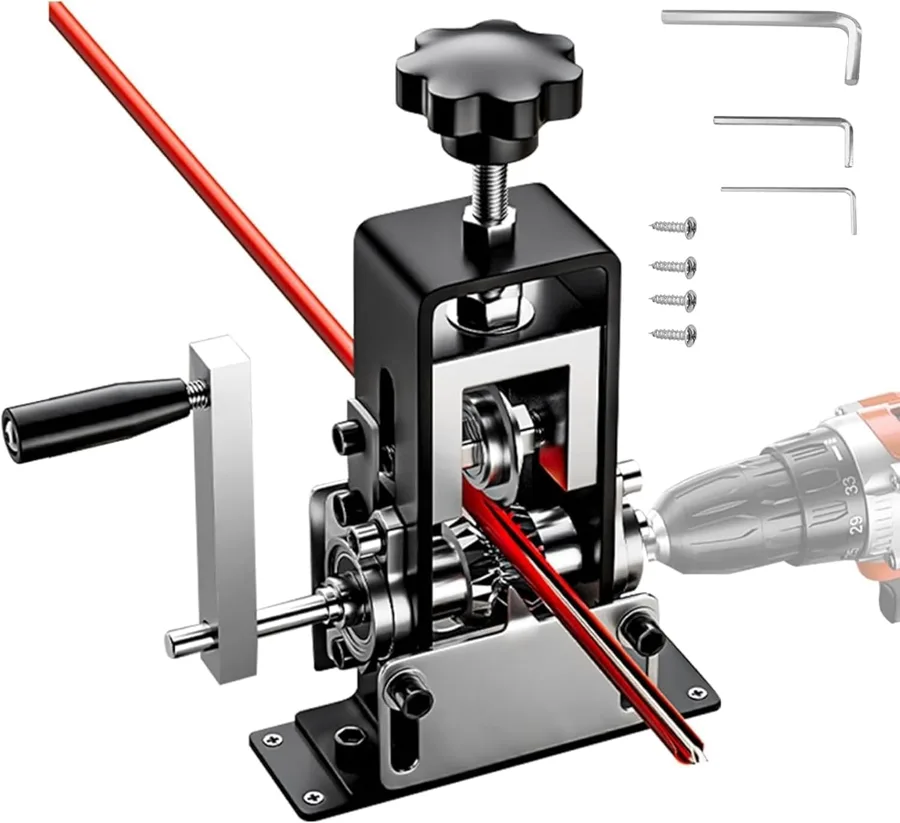
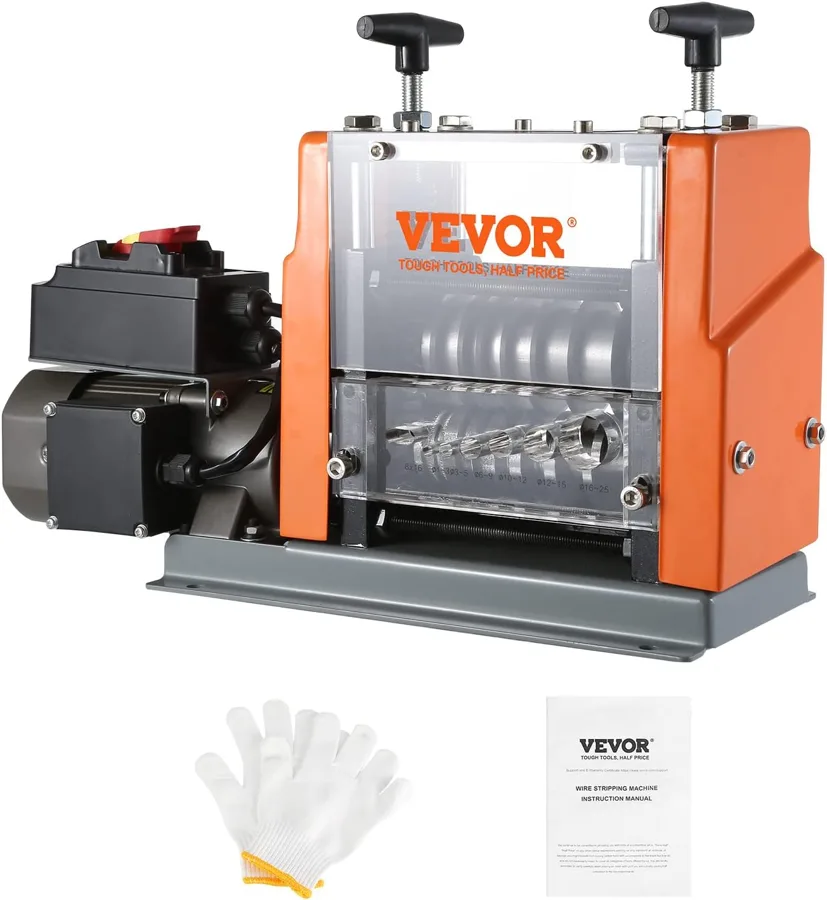
We Compared the Leading Wire Stripping Machines. Here's Why BareYield is #1:
 Written by Benjamin Carter
Past the pliers and the bargain machine that slips, the next step buyers consider is a full electric unit. It takes the cranking off your arm, but it wants an outlet, a permanent spot on the bench and a lot of weight. For a garage pile that comes and goes, a dedicated motor is a big commitment.
What you actually need sits in between: a drive you can switch between hand crank and drill, rollers that grip the sheath, and a hard blade that holds its edge through a whole batch. A range that starts fine matters too, because a mixed pile always hides some thin cord.
Every product page promises the same clean strip. So we set the five side by side on what each one publishes: wire range, blade, drive, build and weight. The differences are bigger than the photos suggest, and they decide whether your pile shrinks or sits there. Here is the comparison, spec by spec.
Here's what we found.
How We Compared Them
We compared all five wire stripping machines on paper, using four criteria: Clean Strip Quality, Speed on Volume, Wire Range, and Adjustment and Durability. Nobody ran these machines for this guide. Instead we weighed what each one publishes about its blade steel, feed design, drive, body material, weight and size.
We also read the kind of feedback buyers leave about machines like these: wire slipping off the wheels, blades that need constant adjusting, frames that feel light. Each complaint maps to a spec we could check. A model earned its ratings only where its published facts backed them up, so the comparison stays on paper.
The comparison put the #1 choice ahead on wire range and on feeding and adjustment help for thin wire. It starts finer than the other four, at 1 mm (0.04 in), and still reaches 25 mm (0.98 in) cable, across copper, aluminum, sheathed, flexible and solid wire. A spring presses the blade on thin wire, and grippy rollers keep each piece on track.
Secondary strengths are real but shared. Crank plus drill drive is also offered by CREWORKS and Hizmivos, and VEVOR's spring steel blade and StripMeister's milled build hold their own on durability. What sets this model apart is the choice of three bodies: an aluminum frame, a black metal body or an ABS/nylon body, so you can pick the build that suits your bench.
One honest limit: the base plate is meant to be fixed to a bench through four screw holes, so it needs a bench and a short setup session. That is a one-time job, and a bolted base is what keeps the machine planted while the drill spins.
The Results:
BareYield is the top pick because it combines a hand crank and drill drive, a 1 to 25 mm (0.04 to 0.98 in) range and rollers that keep wire on track.
Value
With this machine, you stop spending Saturday nights hunched over a utility knife, shaving insulation off one cord at a time. You stop adjusting and readjusting a cheap unit whose wire slips off the wheel. The hand crank covers short runs, and your own drill takes the big pile.
Doing nothing has its own bill. The knife keeps nicking copper, and scored wire fetches less at the yard. A bargain machine that slips ends up replaced, and a crank-only unit turns every long run into a workout for your arm. Meanwhile the pile keeps growing in the garage.
The build backs up your confidence. The hard alloy blade is made to resist wear, and the body comes in aluminum alloy, metal or ABS/nylon. The base plate bolts down through four screw holes, and a spring keeps pressure on thin wire. Set it up once and it earns a permanent place on your bench.
Saturday Afternoon, Pile Shrinking
Picture the machine bolted to your bench, the drill chucked on, wire after wire feeding through as the insulation peels away in long strips. The bare copper drops into a bin, and the pile shrinks while you still have the afternoon left. You load the truck and head to the scrap yard.
It also suits the electrician with leftover THHN and Romex at the end of a job, the homeowner clearing old wiring during a remodel, the mechanic with boxes of heavy battery cable, and the farmer cleaning out a barn workshop each spring. Anyone whose pile keeps growing gets the same relief.
Frequently Asked Questions
Yes. It is a dual drive machine, so you can turn the hand crank or connect an electric drill when the pile is big. It has no motor or battery of its own, so your drill supplies the power.
Start with a short piece of the same wire, adjust the knob screw until the insulation splits cleanly with no copper marks, then run the batch. Keep staples and clamps out of the pile so the edge stays true.
It covers 1 to 25 mm (0.04 to 0.98 in). On thin 1 to 6 mm² wire, a spring presses the blade for you, so you avoid frequent screw adjustments. Very fine or stranded cord may need extra care or a small hand finish.
Sheathed, copper, aluminum, flexible and solid wire are all on its list. Flat cable or old cloth covered wire is different from round cord, so go steadily and fine tune the blade as you learn the pile.
Judge it on the build. The blade is quenched, high hardness hard alloy, the body is aluminum alloy or metal (ABS/nylon on one model), and the base plate bolts to your bench. Those are the parts that take the wear.
If you strip a few wires a month, a knife may be enough. Once the pile keeps growing, the crank or your drill takes over the slow, tiring part, and you get your weekends back.
Fix the base plate to your bench through its four screw holes. The kits for all three models list four fixing screws. A bolted base keeps the machine from shifting while you crank or drill.
Yes, through the black metal body model with spare blade option. The other two models come with the one installed blade, so that option is the one to choose if you want a spare on hand.
Purchase and Delivery Process
Open the store page for BareYield and pick your model: the aluminum frame with auto adjust spring and hand crank, the black metal body model with a spare blade, or the ABS/nylon body model. Add it to your cart and confirm your order.
Pick your bench spot and have your drill ready. With the base plate bolted down, you are set to strip.
Where Can I Buy the BareYield?
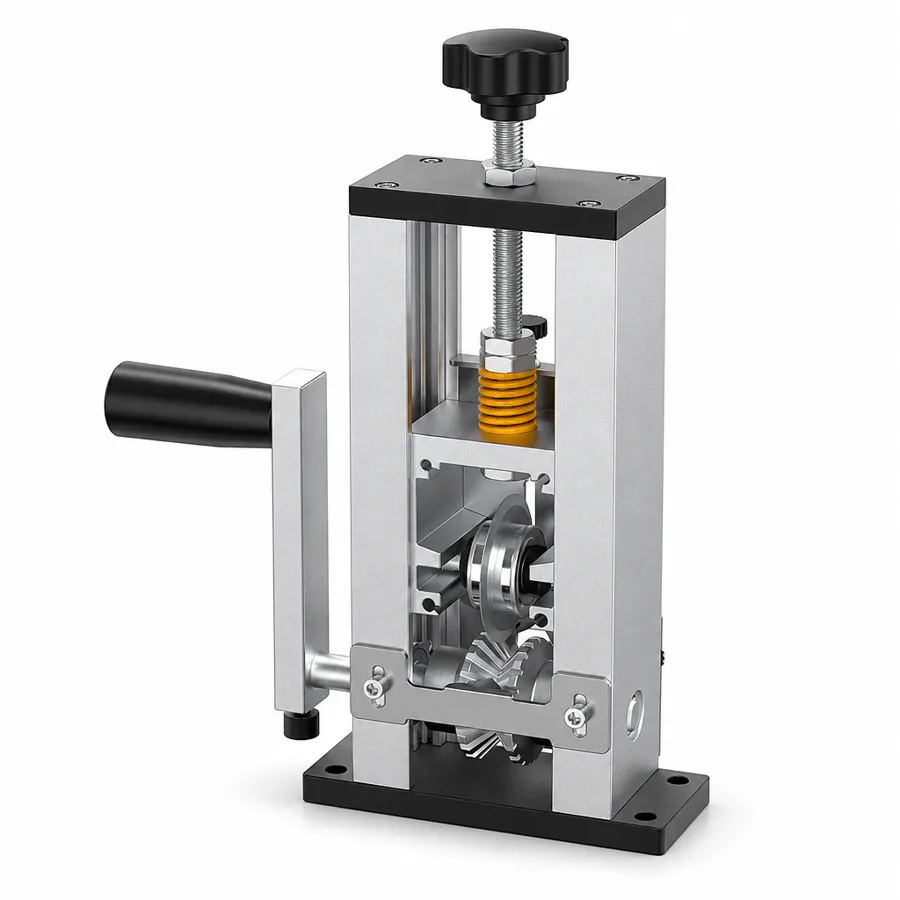
Getting your own BareYield with a 50% discount is simple. Just follow these steps: